







Where it started
Giorgi worked in an office, and wood was strictly a weekend hobby: he built shelves and made gifts for friends. He signed up for the laser cutting course in 2025. His goal was to make cleaner, more precise pieces. A business wasn't on his mind yet.
"At the first session, I assumed the laser did everything on its own. Then I found out that 80% of a good piece is decided in the file and the material, and only 20% in the machine," Giorgi says.
What helped most from the course
According to Giorgi, three topics made the difference:
- The test matrix. For every new material, he builds a power-and-speed table, so he knows exactly which settings will cut through plywood and what color an engraving will come out.
- Kerf compensation. The laser burns away a thin strip of material. Until you account for that in the file, the walls of a box won't fit together snugly.
- Pricing. At the end of the course, every student calculates the unit cost of their own product. For Giorgi, it was his first encounter with real business math.
The first orders
After the course, he rented the lab's machine by the hour. He spent his first hours making samples: coasters with Tbilisi motifs, personalized boxes, New Year's ornaments. He posted photos on Instagram and got his first orders from friends and friends of friends.
His first big order came from a company: 60 engraved boxes for New Year's gifts. That one order taught him more than anything else.
Mistakes that cost him
- Pricing "by eye." On that first big order, he set the price without counting the material used for tests or the rejects. As a result, he worked for almost no profit. Now he uses a formula: material, machine time, design, assembly and packaging, plus 15% for rejects.
- Cheap plywood. He tried to save money and bought plywood from an unknown supplier. It turned out to have voids and glue spots inside, the laser couldn't cut through in places, and part of the batch went in the trash. Now he works with one supplier and runs a test on every new batch first.
- A rushed purchase. He bought a cheap diode laser for home. It handled engraving, but clients kept asking for acrylic, and a diode laser can't cut clear acrylic at all. He sold the machine at a loss and then bought a used CO₂ laser. We wrote a separate post on the difference between the two: CO₂ or diode laser.
- Deadlines. He promised the 60 boxes in 3 days. The cutting really was done in 3 days, but assembly, oiling and packaging took two more. Now his quoted deadlines include all of those stages.
Make your first 20 pieces for friends, but ask them to pay the real price. If everyone loves it when it's free, that doesn't mean anything yet. If they pay and then order again, you have a business.
What it took to open the workshop
For four months, he rented time in the lab by the hour until orders became steady. Only then did he move into his own space. His list looked like this:
- a room where he could run the exhaust duct out through a window;
- a used CO₂ laser, a chiller and an exhaust fan;
- a month's supply of material, plus packaging;
- registration as an individual entrepreneur, so he could invoice companies;
- good photos and an Instagram page where he posts every piece with its price.
"Publishing prices cut the questions in half. Anyone who messages me already knows what it costs," Giorgi says.
Today
Giorgi now runs a small workshop. He makes souvenirs, signs for cafés and corporate gifts. In the winter season, in December, orders jump several times over, so he starts stocking up on material and packaging in the fall.
"The course didn't teach me the craft. I learned the craft afterward, day by day. What the course taught me was the right way to think: test first, then production, and always a calculated price," Giorgi says.
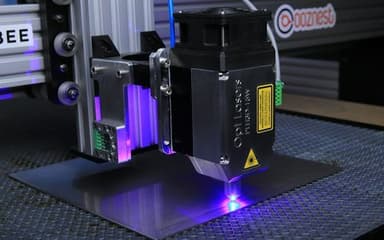 Course at TDSLaser Cutting & Engraving6 weeks · 36 h · Starts 14 OctDetails
If you want to follow Giorgi's path, start with the laser cutting and engraving course. If you'd rather try it for a day first, at our workshop you'll design a wooden box with finger joints, cut it out and take it home.