








The short answer
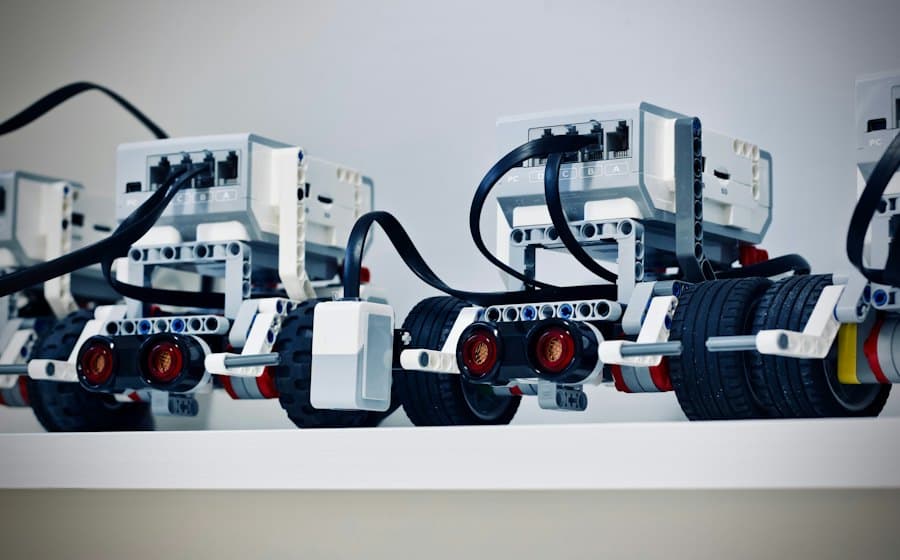
This is the question parents ask us most: "Isn't it too early?" or "Did we start too late?" In our experience, most kids handle structured robotics well from age 7–8, as long as the kit uses block-based programming. The best time to move on to real electronics, such as Arduino, is around 10–11.
Age is only a rough guide. What tells you more is whether your child can follow instructions, stay focused on one task, and take a mistake calmly.
Three signs your child is ready
- They follow instructions on their own. They can build a medium-sized LEGO set step by step without asking for help every minute.
- They can stick with one task for 40–45 minutes. A robot rarely does the right thing on the first try. Your child needs to be willing to try, adjust, and try again.
- They're comfortable with numbers. They understand what "go forward 20 centimeters" or "turn 90 degrees" means. They don't need the multiplication table for this, just a sense of distance and direction.
If you already see two of the three signs, your child is probably ready. The third one tends to develop quickly in class.
Stages by age
| Age | What they do | What they work with | What they learn |
|---|---|---|---|
| 6–7 | Build simple models and make them move | LEGO Spike Essential, building sets | Cause and effect, sequencing |
| 8–11 | Program robots with sensors | LEGO Spike Prime, Scratch | Loops, conditions, sensors |
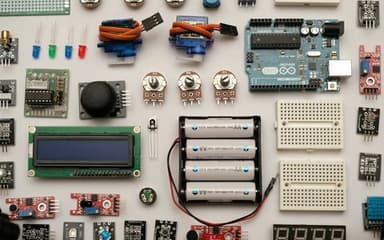
| 10–13 | Build real electrical circuits | Arduino, breadboard | Current, voltage, first lines of code |
| 12+ | Create autonomous robots and enter competitions | Arduino, micro:bit, Python | Algorithms, team projects |
The stages overlap: some 9-year-olds are already ready for Arduino, while some 12-year-olds still prefer working with LEGO. Both are perfectly normal.
LEGO or Arduino: where to start
LEGO's big advantage is fast results. A child can build a moving model in 20 minutes with no wires or soldering, so motivation stays high. Arduino shows much more deeply how electronics work, but a single misplaced wire can stop the whole project. For a young child, that often ends in frustration.
That's why we spend the first two months of our course with LEGO Spike. Once kids understand loops and conditions, we move to Arduino, so the only new thing is the "hardware" while the logic is already familiar.
 Course at TDSRobotics: From LEGO Spike to Arduino4 months · 64 h · Starts 19 OctDetails
What's normal in the first few months
- The robot doesn't do what your child wanted. That's the heart of the lesson: finding the mistake and fixing it.
- An 8-year-old sometimes just wants to build and isn't that interested in programming. This balance shifts over time.
- Around weeks 4–6, the tasks get harder and interest may dip for a while. This is exactly when small team competitions help.
Don't ask "What did you learn today?" Ask "What didn't work today, and how did you fix it?" The answer will tell you far more about your child's progress.
What you can do at home
- Don't buy an expensive kit in the first week. Two or three months of classes will show whether the interest is lasting.
- Use free tools: Scratch and Tinkercad Circuits, where you can build and test an Arduino circuit right in the browser.
- Watch robotics competitions together, such as the FIRST LEGO League finals. When kids can see a goal, they stick with it longer.
- Set aside a separate table or box for parts. When an unfinished project doesn't get taken apart, kids come back to it more often.
How to choose a course
Before you sign up, ask these questions:
- How many kids are in a group? With more than 10 kids, a trainer can no longer catch everyone's mistakes.
- How many kids share one kit? Ideally, one kit per child, or two at most. When three share, one builds and the others watch.
- How does the course end? A good program has a final project or competition where kids show off their own robot.
- Can parents see the progress? An open lesson or a monthly report tells you much more than a certificate.
When it's better to wait
If your child is 6, doesn't read fluently yet, or gets very upset about mistakes, start with building sets and ScratchJr, and come back to structured robotics in 6–12 months. That's not a failure: these kids often make faster progress later on.
For older kids, ages 10–15, we have a separate course: Electronics and Arduino. If you're still deciding, come to an open lecture or a family workshop. Your child will get to know the lab, and a trainer will tell you honestly which stage is the best place to start.