















A good winter camp for kids gives a child something new to make with their own hands over the holidays, puts them in a group of their own age and is run by adults who take safety seriously. Before you sign up, check five things: age groups, how many children each instructor looks after, the daily schedule, the safety rules and the cancellation terms. Each is explained below.
Winter holidays are short, so a camp lasts only a few days. In that time a child should make something new and meet new friends without getting worn out. A well-chosen camp manages that; a poorly chosen one feels like another week of school.
This guide explains what we check, both as parents and as camp organisers, and then describes our own tech winter camps in Tbilisi.
Day camp or overnight camp?
At a day camp the child arrives in the morning and goes home in the evening. At an overnight camp they stay away from home for several days. Most winter camps in the city are day camps, and for a first camp that is the easiest choice: the child is home every evening and can tell you everything.
An overnight camp builds more independence but needs more preparation, especially for a 7–9-year-old. If your child has never been to camp, start with a day camp.
What to check before choosing a winter camp
| What to check | Why it matters | What to ask the organiser |
|---|---|---|
| Age groups | A 7-year-old and a 13-year-old learn differently | Which ages is each group for? |
| Instructors per group | Supervision is the base of safety and learning | How many children per instructor? |
| Daily schedule | Work and rest should alternate | What does one day look like? |
| What the child makes | Children remember what they built | What will my child make, and what do they keep? |
| Safety | Tools, machines, winter outdoors | Who uses the machines, and under what rules? |
| Pick-up | A child should never leave with a stranger | Who may collect my child? |
| Cancellation and refunds | Children get ill often in winter | What happens if we cannot come? |
Age groups
A good camp splits children by age. A 7–10-year-old needs play-based learning, short tasks and frequent breaks. A 10–14-year-old wants a harder project they can build over several days. If one group mixes 6- and 15-year-olds, someone will be bored.
How many children per instructor
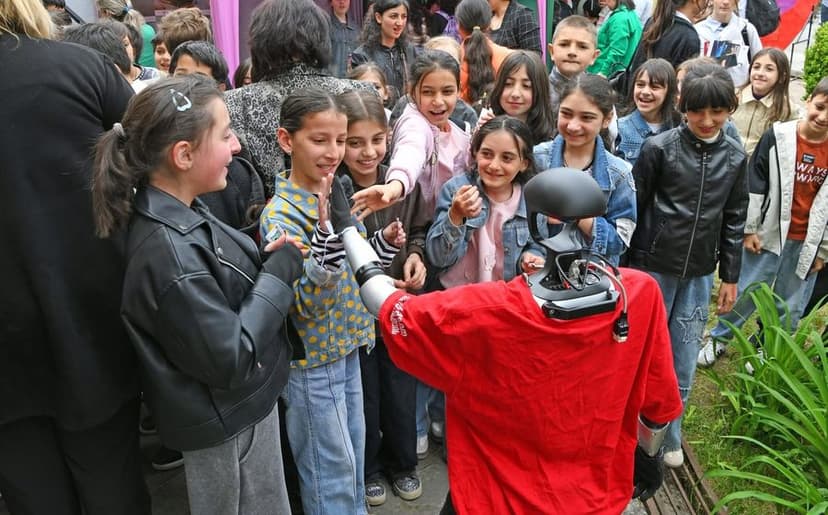
The American Camp Association, which accredits camps, sets these minimum ratios for day camps: one adult for every 8 children aged 6–8, and one for every 10 children aged 9–14. It is a US standard, but a good benchmark for any camp. If one instructor has 20 children, they cannot supervise properly, let alone teach.
The daily schedule
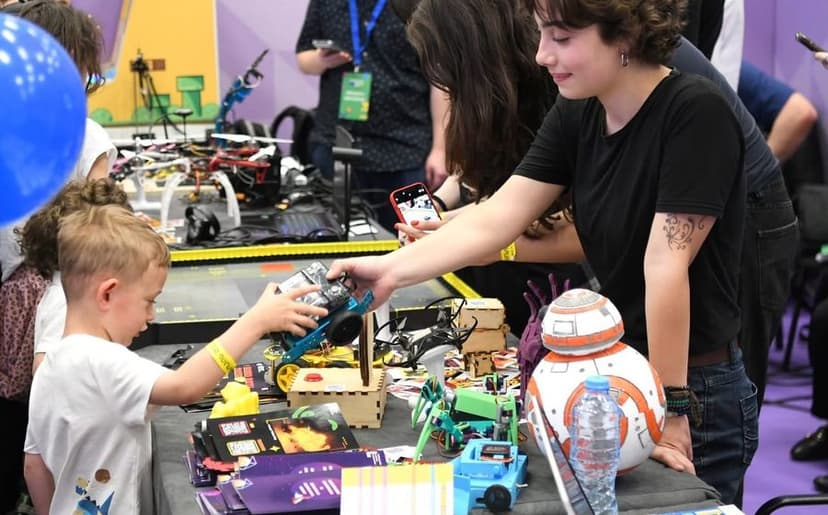
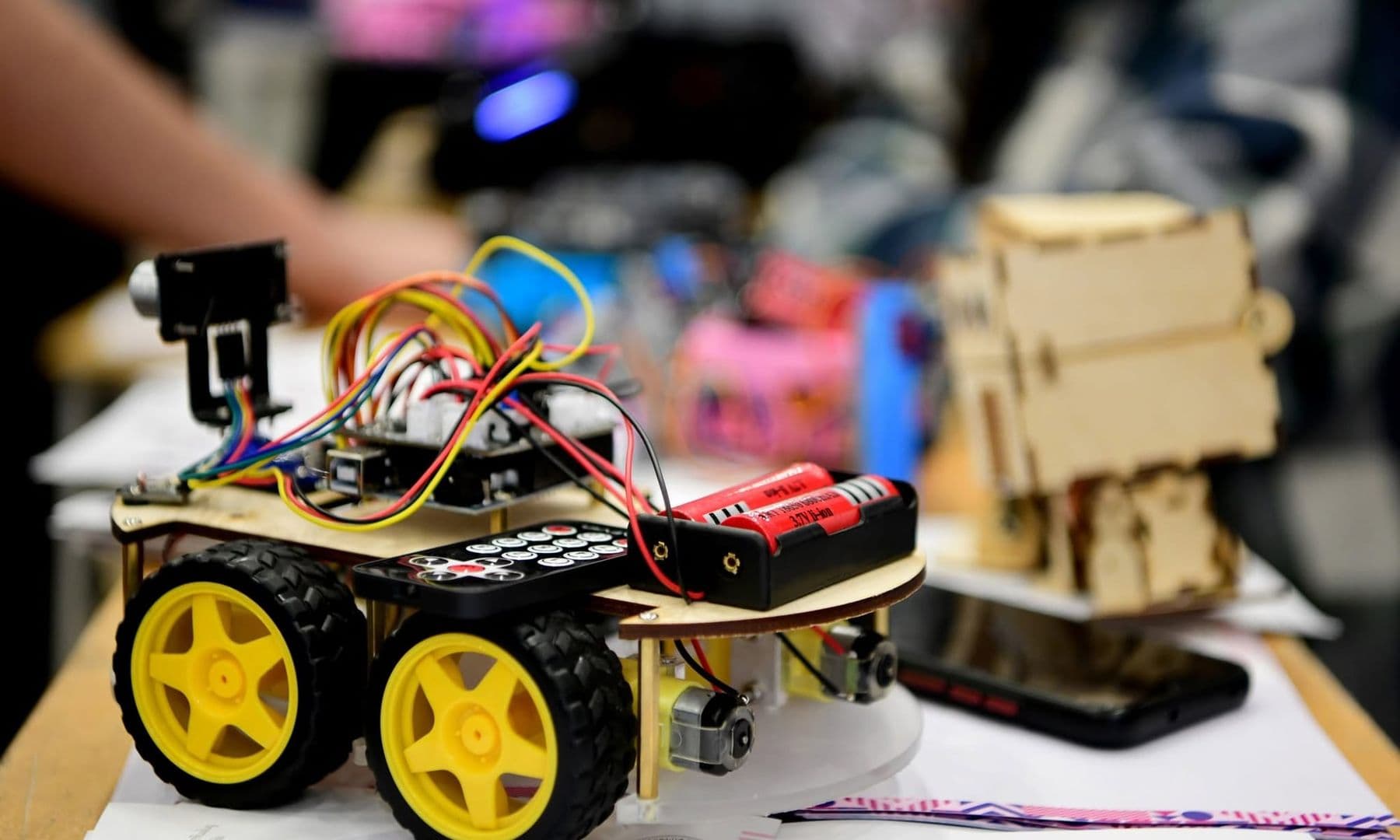
Ask what one day looks like. A good schedule alternates active work, breaks, food and movement. At a tech camp, screen time should mix with building by hand: children design on a computer and then hold the real object, or write a program and watch their robot move.
What your child will make
At the end of camp your child should be able to say what they made. Ask which project the children finish and what they keep afterwards. Some things go home with the child, while machines and kits stay in the lab, and it helps to know that in advance.
Safety at a winter camp
Safety matters even more at a tech camp, because there are real machines and tools.
- Machines: a 3D printer nozzle is hot, and laser cutting and soldering are only done under an instructor's eye and with protective rules.
- Drones: flying only with an instructor present, in a protected space.
- Winter: if breaks are outdoors, pack warm clothes and spare socks.
- Health: tell the organiser about allergies and medicines in advance.
- Pick-up: a child should only be handed to a parent or a person the parent named in advance.
The American Camp Association advises parents to ask how staff are chosen and trained, how the camp handles safety and how it keeps families informed. A good organiser is happy to answer.
10 questions to ask before you sign up
- Which ages is the group for, and how many children are there per instructor?
- Who are the instructors, and what experience do they have with children?
- What does one day look like: when does it start, end and break?
- What will my child make, and what will they keep?
- Does my child need any prior knowledge or their own equipment?
- What should go in their bag?
- How are meals arranged?
- Who may collect my child, and how will you know?
- What happens if my child is ill and misses camp?
- How will you reach me if my child needs something?
Before choosing, show your child the options and ask what interests them most: robots, drones or 3D printing. A child who chose the camp themselves arrives far more motivated.
What a tech camp gives a child
A tech camp is more than fun. In a few days a child tries several important things:
- Finishing a project: from an idea to a finished object or a moving robot, in a few days.
- Teamwork: one builds, another programs, a third tests, and then they swap.
- Finding mistakes: if the robot does not move, the child works out whether it is a wire or the code, and fixes it.
- Making instead of consuming: the child sees that technology is something they can make with their own hands, not just use on a screen.
- Testing an interest: camp is a good way to find out what really interests your child before you choose a year-long course.
How to prepare your child for camp
- Talk it through beforehand: what they will do, who will meet them and when you will collect them. A child who knows this goes more calmly.
- Pack the bag from the organiser's list: water, warm clothes for outdoor breaks, spare socks. Put your child's name on their things.
- Arrive 10 minutes early on day one: meet the instructor and tell them what they should know about your child (allergies, medicines, fears).
- Check the phone rule: at some camps phones stay in the bag during the day, so children can focus.
- In the evening, ask what they built and what was hard. Praise the effort, not only the result.
Our tech winter camps in Tbilisi
At Tbilisi Digital School we are preparing winter holiday camps for children aged 7–14 in three directions:
| Camp | Ages | What children do |
|---|---|---|
| Little Engineers | 7–10 | Build, connect and bring their own projects to life, through play and in teams |
| Drones and Robots | 10–14 | Learn how a drone and a robot are built, how they move and how they are controlled |
| 3D Printing and Design | 10–14 | Design their own object on the computer and watch a 3D printer turn it into a real thing |
Little Engineers need no previous knowledge. With drones and machines, children always work under an instructor's eye and by the safety rules.

We will publish the exact dates, daily schedule and prices at the end of November. Until then you can leave your name and phone number on the winter camps page and we will tell you first. There is no online payment at this stage.
After camp a child can carry on with a year-long course: those who fall for robots have our robotics courses for kids, those who love 3D design have the 3D printing and modelling courses. If you are unsure, read what age to start robotics.
Winter camp or a year-long club: what is the difference
| Winter camp | Year-long course (club) | |
|---|---|---|
| Length | A few days in the holidays | 7 months, 3 phases |
| Goal | A first look, testing an interest | Knowledge and skills step by step |
| What the child does | Finishes one project | Finishes a project in every phase |
| For whom | Children still choosing a direction | Children who know what they like |
Camp is a good first step. If your child enjoys it, a year-long course turns that interest into real skills: they build not one project but many, each harder than the last.
Frequently asked questions
When is the winter camp?
During the winter school holidays. We publish the exact dates, programme and prices at the end of November. Sign up on the camps page and we will tell you first.
What age can a child go to winter camp?
Our camps are for ages 7–14: Little Engineers for 7–10, Drones and Robots and 3D Printing and Design for 10–14. For a first camp, a day camp is usually better, because the child goes home every evening.
How much does a winter camp for kids cost?
It depends on the length of the camp, the length of the day and what is included: materials, meals, transport. We publish our camp prices together with the dates at the end of November.
Is there a sibling discount?
Yes, the second child gets 15% off the camp. Contact us before you pay.
What if my child is ill and cannot come?
Under our terms, if you cancel at least 3 business days before the camp starts, you get a full refund. If you cancel later, you can move the place to another camp or event, or give it to another child. The details are in our Terms of Service.
Next step
Choose a direction together with your child and leave your name and phone number on the winter camps page. If you have a question, contact us and we will explain everything.
Sources
- Picking The Right Day Camp, American Camp Association
- How to Choose a Camp: Safety Tips, American Camp Association
- Camper-to-Staff Ratios, American Camp Association