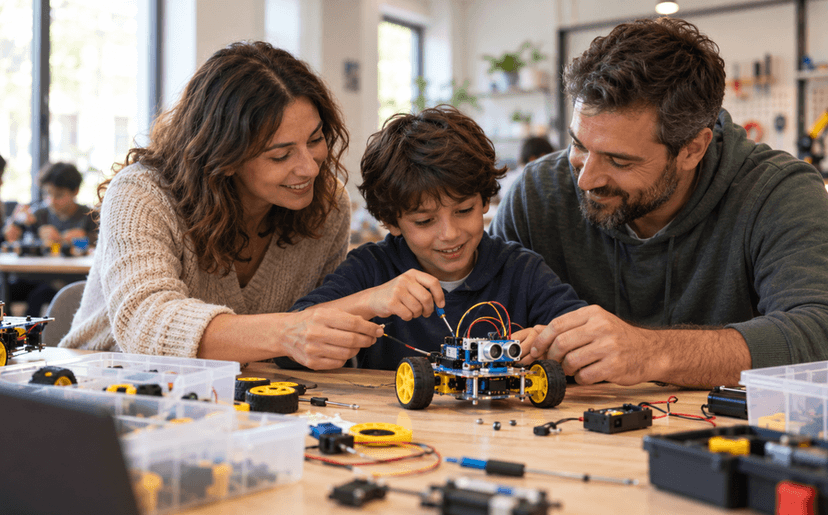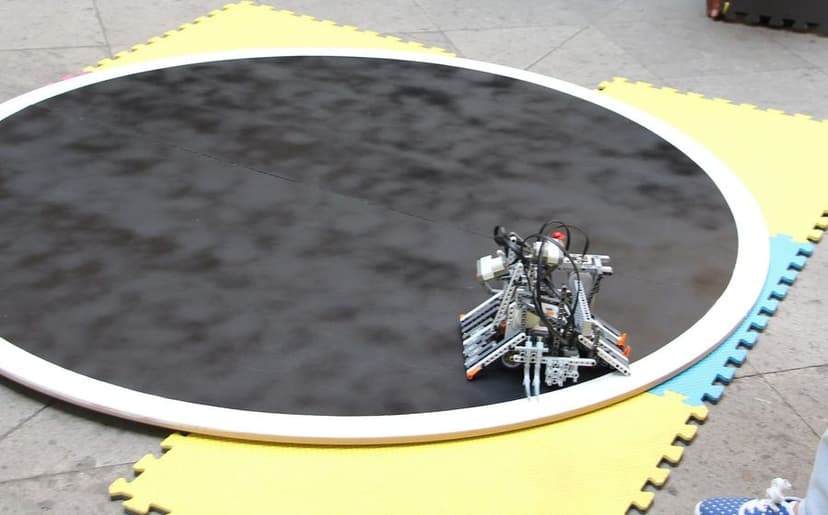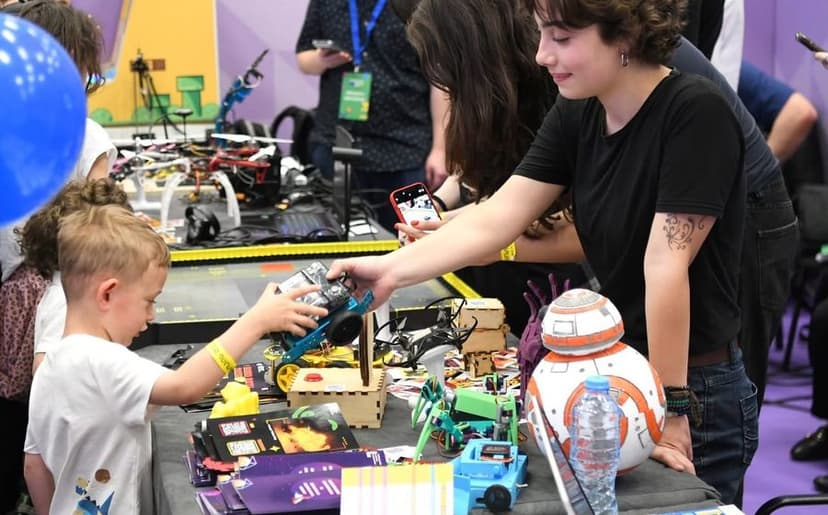








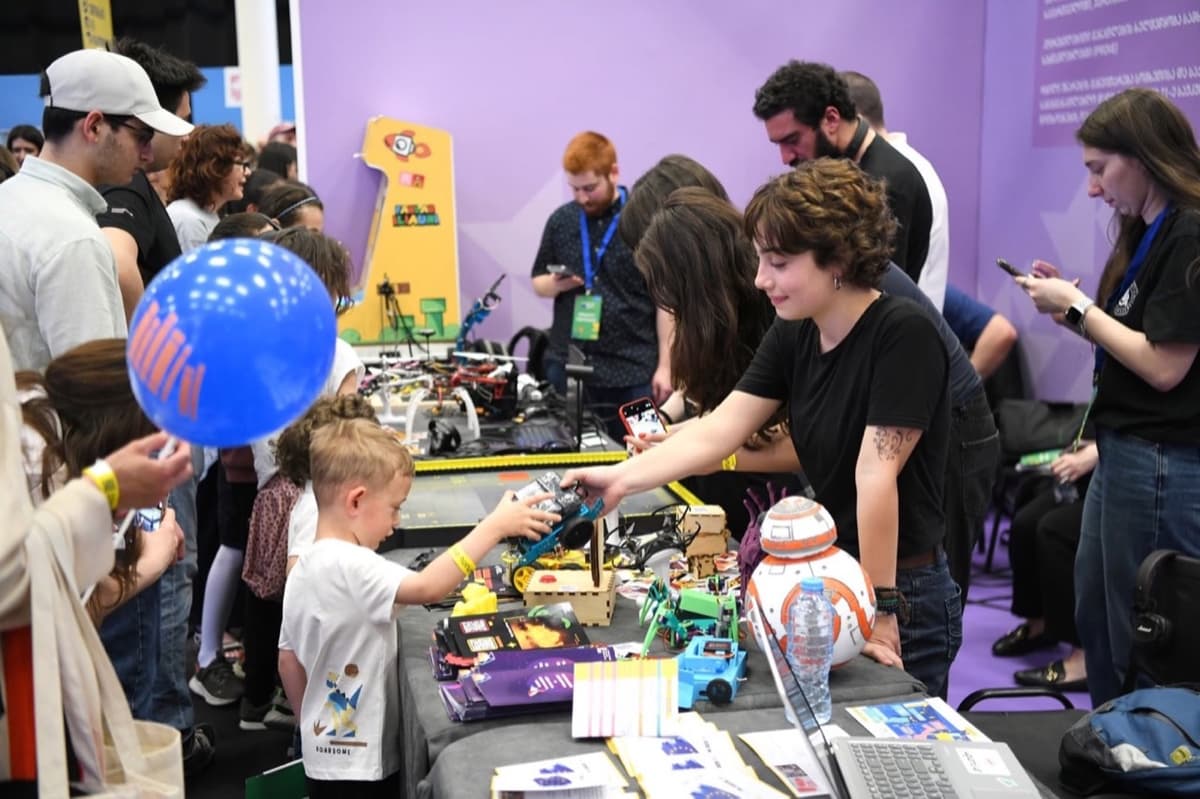
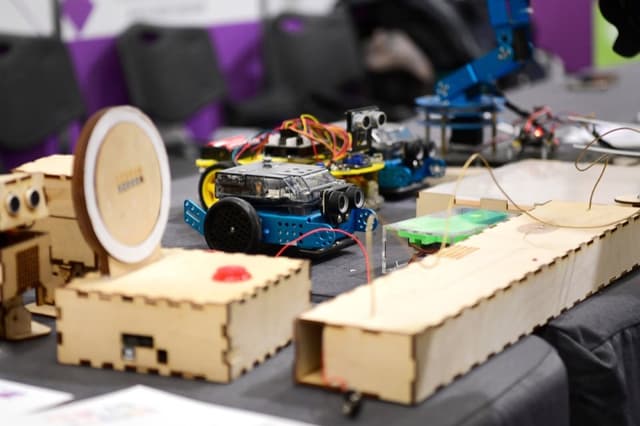
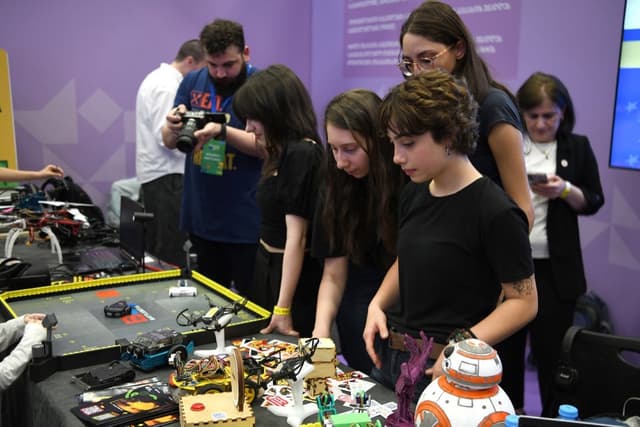
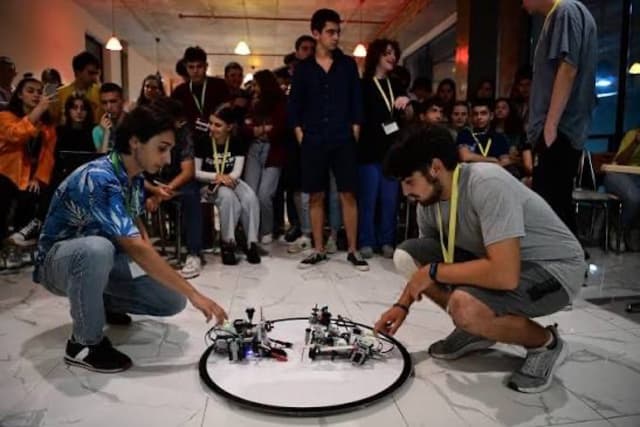
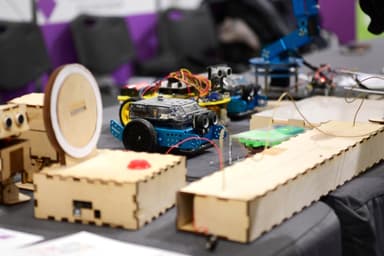
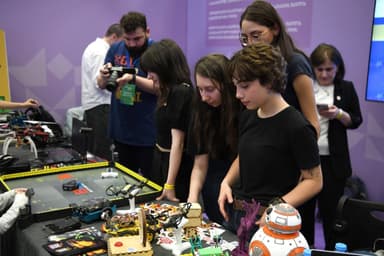
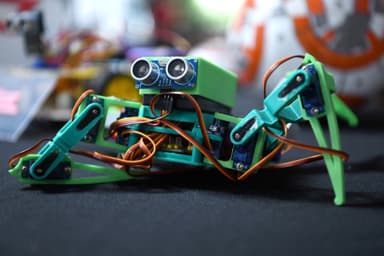
Tbilisi Digital School runs three robotics courses for kids aged 7–17, split by age: Scratch and mBot for ages 7–10, several different robots for ages 10–14, and electronics, Arduino and a robotic arm for ages 13–17. In every class children build and program real robots themselves; the kit is included and what they build goes home with them.
A note for international families: all three robotics classes are taught in Georgian, in person, at our lab in Tbilisi. If your child is still learning the language, talk to us before you enrol.
Which robotics course for which age
- Ages 7–10: Scratch and mBot robotics course for ages 7–10: visual coding, animations and games, then a real mBot robot.
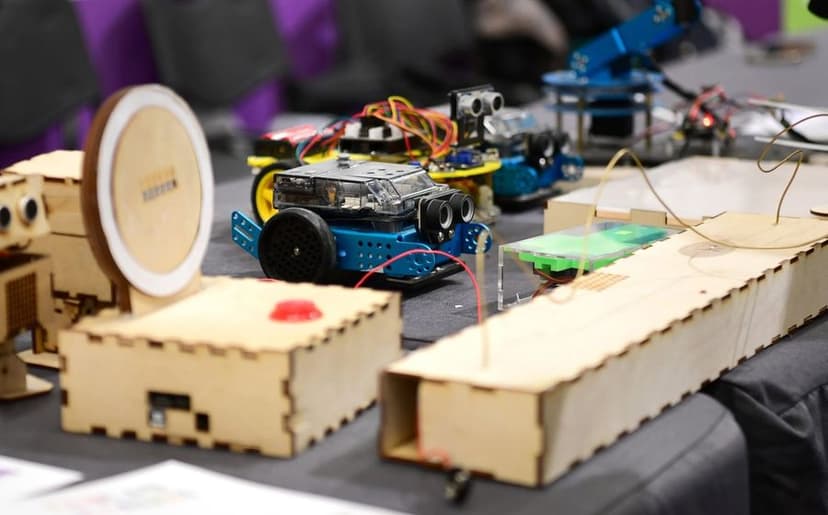
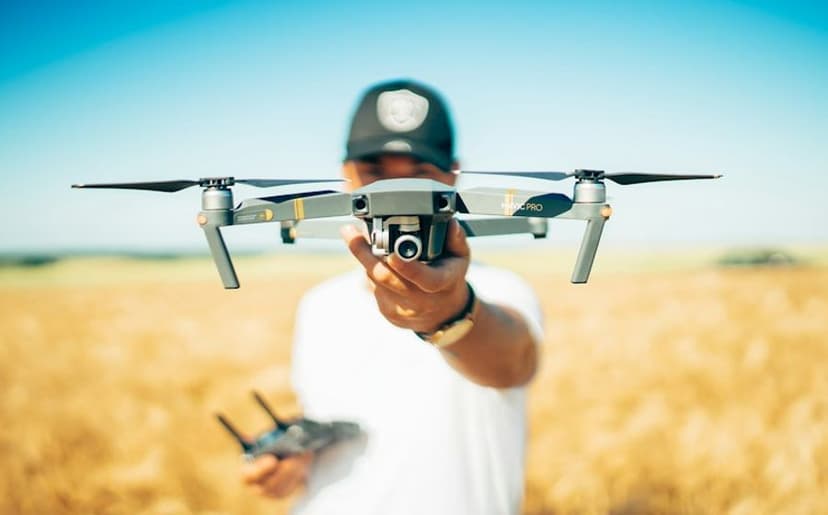
- Ages 10–14: robotics course for ages 10–14: mBot, Ottobot, a 4WD robot, a Tello drone and how a robotic arm works.
- Ages 13–17: advanced electronics and robotics course for teens: circuits, Arduino C++, smart devices, a 4WD robot and a robotic arm.
The age bands overlap at 10 and at 13–14. There, choose by experience rather than birthday: a child who has never coded is often happier at the earlier level.
Ages 7–10: from Scratch blocks to a moving mBot
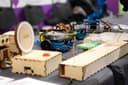
In Scratch, children snap colourful blocks together to make animations, interactive characters and a small game, picking up sequences, loops and conditions along the way. Then the same logic moves onto a real robot: in mBlock they make the mBot drive, light up, play sounds and sense its surroundings, learn how motors and sensors work, and program it to follow a line. The course ends with a team project and a competition. The mBot kit, sensors and laser-cut parts are included, and the robot goes home. Read more in how young children learn to program a robot with mBot and Scratch.
Ages 10–14: many robots in one course
This course moves through several platforms:
- mBot and Arduino, for building and programming robots and a first mini project;
- sensor systems that let a robot react to its surroundings;
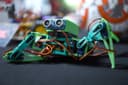
- Ottobot, a moving robot children build themselves;
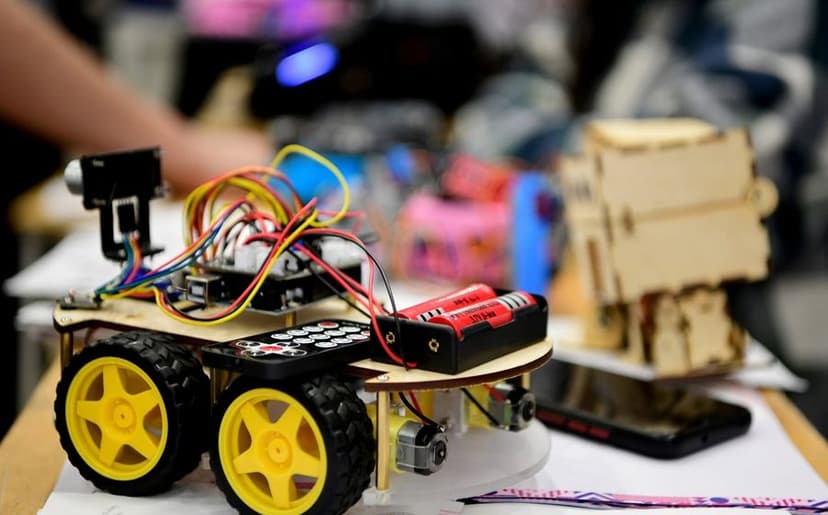
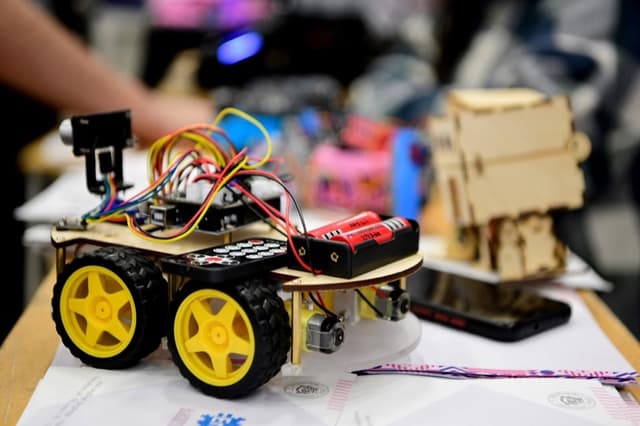
- a 4WD robot that drives on its own or by remote control;
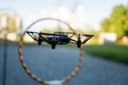
- the Tello drone, for the basics of flight and control;
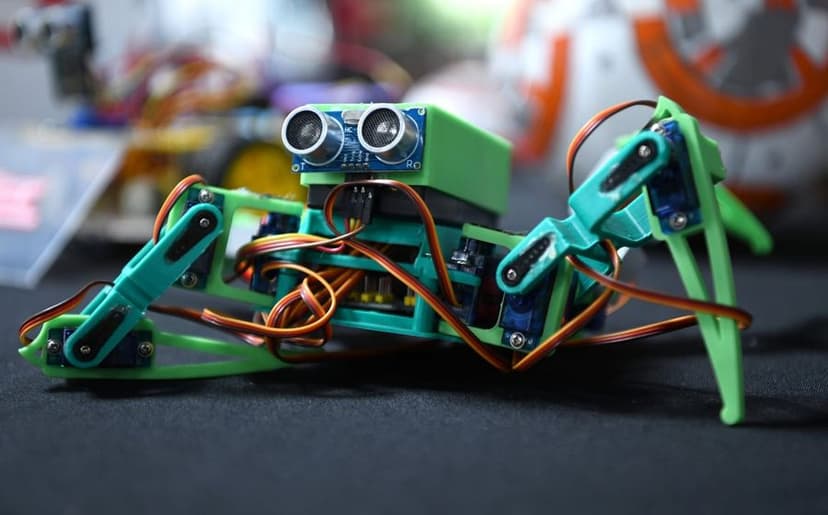
- a robotic arm and a humanoid robot, to see how complex machines move.
Kids learn mechanism design, the basics of motion and first steps in autonomous navigation. No experience is needed, and the course ends with a competition and a final. The Tello drone and humanoid robot stay in the lab; what your child builds is theirs to keep.
Ages 13–17: electronics, Arduino and a robotic arm
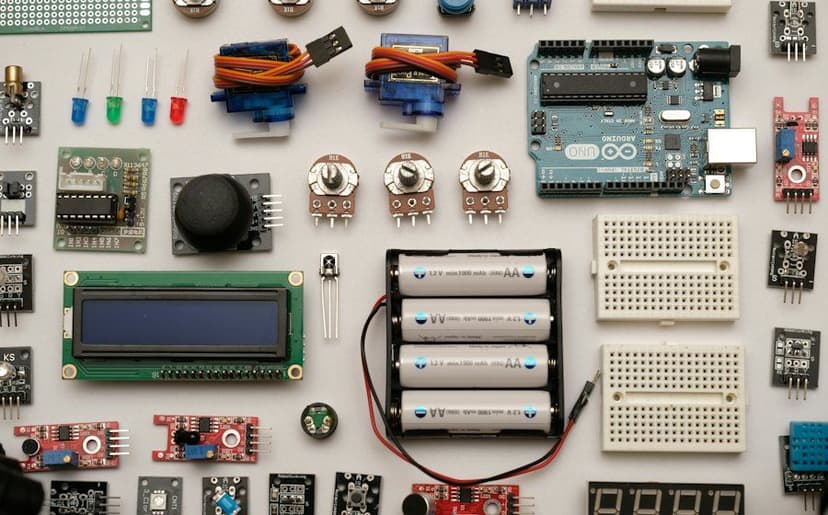
The Advanced course is for teens curious about what happens inside a robot, or already thinking about engineering. It starts with electronics basics (Ohm’s law, LEDs, resistors, the solderless breadboard), then Arduino programming in C++, displays, sensors and data, and actuators such as motors and servos. Teens then build:
- smart devices: an irrigation system, a door lock and a climate monitor;
- a 4WD mobile robot with autonomous driving and Bluetooth control;
- a robotic arm they assemble, calibrate and program.
Every task follows the same loop: build the circuit, write the code, test, fix. The course ends with a final project. The Arduino kit, sensors, motors and robot parts are included, and what your teen builds is theirs to keep.
How the classes work
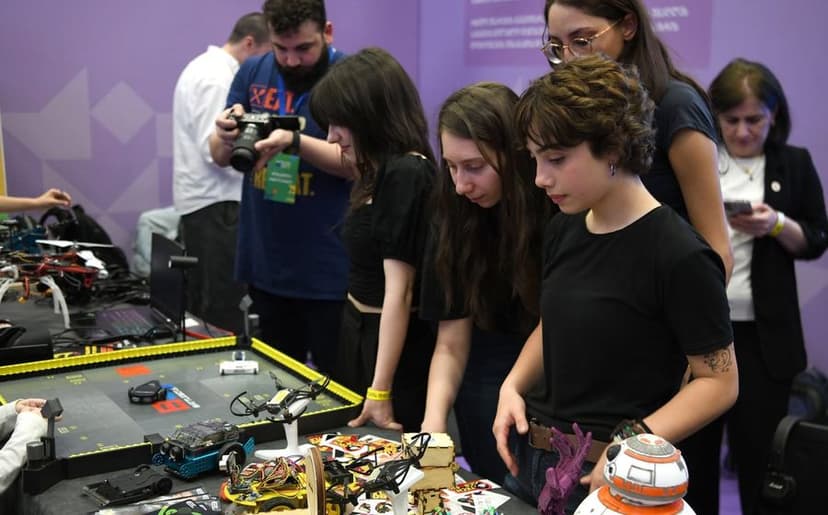
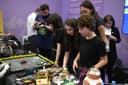
Lessons are built around practical tasks, experiments and team challenges, and the 10–14 and 13–17 courses add mentoring. Along the way kids practise logical and creative thinking, problem solving and teamwork. If contests motivate your child, our guide to robotics competitions for kids explains the main formats.
Choosing a course and getting started
- Aged 7–9 and new to coding: start with Scratch and mBot.
- Aged 10–12 and loves building things that move: the 10–14 course.
- A teen keen on circuits and code: the Advanced course.
- A teen who mostly wants to fly: our drone course for ages 13–17.
Not sure robotics will click? Come to the open meeting on robotics for parents and kids or the parent-and-child robot-building workshop. For a fuller checklist, see how to choose a robotics class for your child, and for questions about level or language, book a free consultation.