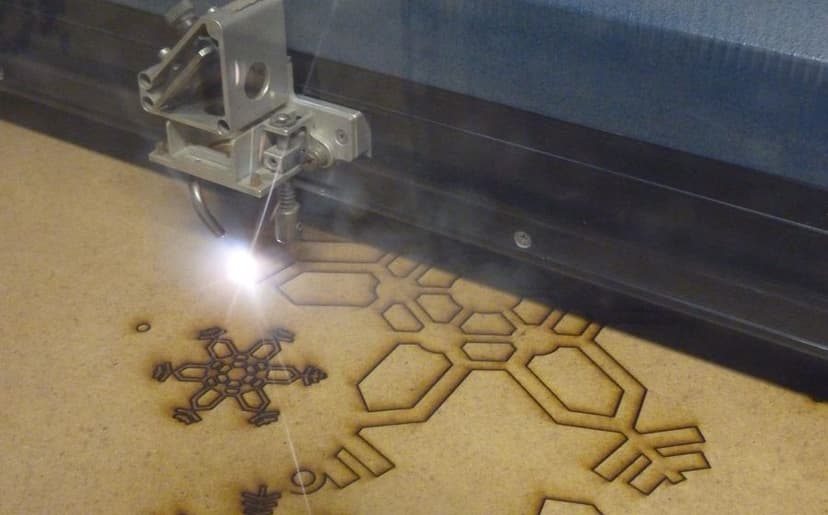








A CO₂ laser cuts wood, plywood, MDF, acrylic, natural leather, paper, card, cork and felt. It only engraves glass, stone and anodised aluminium, and a desktop machine can neither cut nor directly engrave bare metal. Some materials are never cut at all: PVC and vinyl release hydrogen chloride (HCl) gas, ABS can release hydrogen cyanide, and polycarbonate cuts poorly and burns.
These rules come from the safety pages of university maker labs and are almost identical everywhere. Below, one table shows what a 60–100 W CO₂ laser cuts and how thick; after that we go through each material: what to know before you buy, what trips beginners up and why some materials are banned.
If you want the basics first (how the machine works, what kerf is), start with what laser cutting and engraving is.
Materials table: what a CO₂ laser cuts and engraves
| Material | Cut | Engrave | Thickness (≈100 W) | Note |
|---|---|---|---|---|
| Plywood (birch) | Yes | Yes | 3–6 mm easily, up to ≈10 mm | Glue layers slow the cut |
| MDF | Yes | Yes | 3–6 mm | Dark edge, lots of smoke |
| Solid wood | Yes | Yes | up to ≈10 mm | Resinous wood burns unevenly |
| Acrylic (PMMA) | Yes | Yes | ≈10 mm, more if slow | Polished edge |
| Natural leather | Yes | Yes | Thin leather | Vegetable-tanned only |
| Paper, card | Yes | Yes | A few mm | Catches fire easily |
| Felt, cotton, cork | Yes | Partly | Thin | Chars at low speed |
| Glass | No | Yes | Surface only | Surface turns frosted |
| Stone (slate, granite) | No | Yes | Surface only | High-contrast engraving |
| Anodised aluminium | No | Yes | Surface only | The laser bleaches the dye |
| Bare metal | No | With spray only | Surface only | Reflects the beam |
The thicknesses are guidelines, not guarantees. The same “6 mm plywood” cuts differently from different suppliers, and the real limit shifts with focus, lens, tube condition and Air Assist. That is why every new material starts with a power and speed test. One manufacturer’s (Trotec’s) rule of thumb for acrylic is roughly 10 W of laser power per 1 mm of thickness.
Laser cutting wood: plywood, MDF and solid wood
Laser cutting wood is the most common job, but “wood” is not one material.
Plywood is made of thin wood layers glued together, and the glue is the problem: when the beam hits a lump of glue or a void between layers, it cannot cut through at that spot. Birch plywood made for lasers, with even layers and laser-friendly glue, is far more predictable.
MDF is pressed wood fibre with resin. It cuts evenly and engraves well, but the edge comes out dark and it produces a lot of smoke. Some MDF is made with formaldehyde-based resin, and some university labs ban it, so ask your supplier whether it is suitable for lasers.
Solid wood is natural and beautiful, but dense wood cuts slowly, and resinous species (pine, for example) burn unevenly and leave sticky residue. The best species for engraving and how to prepare a photo are covered in laser engraving on wood.
 Course at TDSLaser Cutting & Engraving6 weeks · 20 h · Starts 17 NovDetails
Cutting acrylic: cast or extruded?
Acrylic (PMMA, Plexiglas) is one of the best laser materials: a CO₂ beam cuts it cleanly and the edge comes out almost polished. Shops sell two kinds, and the difference matters:
- Cast acrylic engraves with a bright, frosted white mark. Its thickness varies more (about ±15%), so measure every sheet for precise joints.
- Extruded acrylic gives a flame-polished cut edge, but engraving on it looks grey and weak. Its thickness is more consistent (about ±5%).
Tips for acrylic: engraving the back face with a mirrored design gives a recessed image seen from the front. Strong Air Assist makes acrylic edges milky, so it is turned down for acrylic. Also remember that a diode laser cannot cut clear acrylic, because the blue beam passes straight through; that is one reason acrylic shops choose CO₂. See CO₂ or diode laser for the details.
Leather, paper and fabric
Leather cuts precisely and engraves beautifully, but only vegetable-tanned leather. Chrome-tanned leather gives off toxic fumes when cut, and faux leather is often PVC and is banned outright.
Paper and card cut fast but catch fire easily: high speed, low power and Air Assist always on. Felt, cotton and cork cut well too; at low speed the edge chars.
Laser cutting metal and laser engraving metal
This is the most common question, and the answer is short: a desktop CO₂ laser does not cut metal. Bare steel, copper and aluminium reflect the 10.6 µm beam. Steel sheet is cut in factories by industrial lasers rated in kilowatts, which blow the molten metal out with a strong gas jet.
Laser engraving metal, however, is possible in three ways:
- Anodised aluminium: the CO₂ beam bleaches the dyed anodic layer, leaving a bright, crisp mark.
- Marking spray or paste: the metal is coated, the laser bonds the coating to the surface, and the excess is washed off, leaving a dark, permanent mark.
- A fibre laser: its 1064 nm beam engraves stainless steel, aluminium, brass, copper and titanium directly, which is why metal-marking shops choose fibre.
Laser engraving stone, glass and ceramics
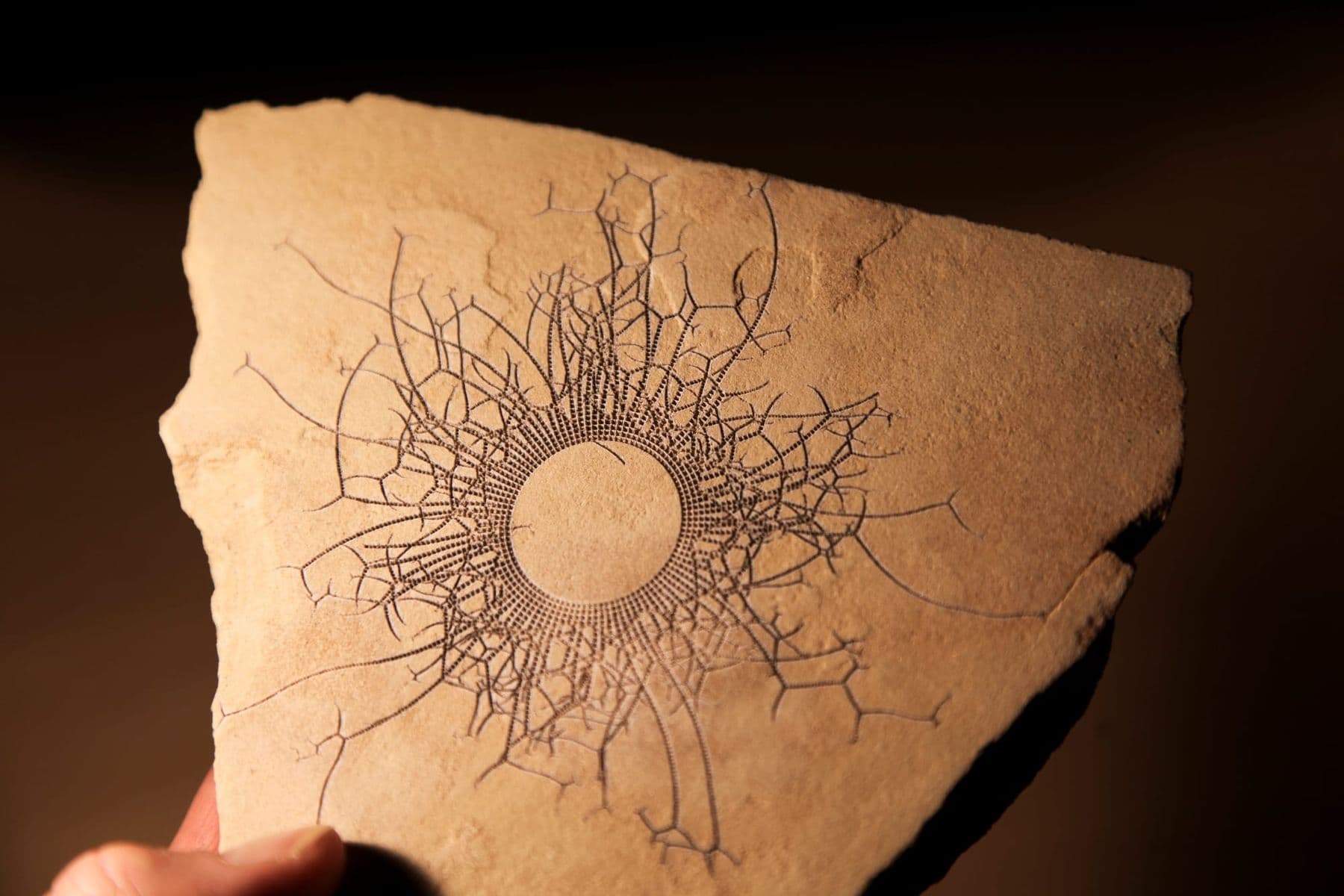
A laser cannot cut stone or glass, but it can engrave them. Slate is one of the best: a light, high-contrast image on a dark surface. Granite and sandstone also engrave well, especially with fine lines. On glass, the laser frosts the surface for a sandblasted look.
On stone and glass the engraving leaves a white or light mark, so in LightBurn people often turn on Negative Image: that way the light areas of a photo stay light on the stone too.
How to test a new material
The table tells you what can be cut; only a test tells you how. LightBurn has a Material Test tool that by default creates a 10×10 grid, with speed changing by row and power by column. The method is simple:
- Measure the sheet thickness with calipers in several places.
- Set the focus precisely and switch on Air Assist.
- For cutting, find the lowest power and highest speed that reliably cut through.
- For engraving, pick the square where the colour is right and the surface is not burnt.
- Write it down: material, thickness, power, speed and passes.
Watch the units: mm/s and mm/min differ by a factor of 60, and a mix-up gives either a weak cut or too much heat and a fire risk.
Which materials should never be laser cut?
This list comes from university lab rules. Each material is dangerous to people, to the machine, or creates a fire risk.
| Material | Why not |
|---|---|
| PVC, vinyl, faux leather | Releases hydrogen chloride (HCl), harms people and the machine |
| Polycarbonate (Lexan) | Absorbs the beam, does not cut, burns |
| ABS | Can release hydrogen cyanide, melts |
| HDPE and polypropylene | Melt and catch fire easily |
| Polystyrene foam | One of the top causes of laser cutter fires |
| PTFE (Teflon) | Releases dangerous gases |
| Fibreglass, coated carbon fibre | Toxic fumes and dust harmful to the optics |
| Galvanised steel | Produces zinc oxide fumes |
| Mirrored surfaces | Reflect the beam back |
| Chrome-tanned leather | Gives off toxic fumes |
Some labs extend the list to materials with flame-retardant coatings, self-adhesive materials and anything of unknown composition.
If you do not know what a sheet is made of, do not cut it. A clear plastic could be acrylic, but it could also be PVC, polycarbonate or PETG, and you cannot tell by eye. Buy from a supplier who gives you the composition and a safety data sheet (SDS), and label the sheet with a marker.
Frequently asked questions
Can a CO₂ laser cut metal?
A desktop 40–150 W CO₂ laser cannot: bare metal reflects its beam. Metal is cut with industrial lasers rated in kilowatts and engraved with a fibre laser, or with a CO₂ laser and a marking spray.
How thick can a 100 W laser cut plywood?
3–6 mm plywood cuts comfortably in one pass. Up to about 10 mm is possible, but slowly, sometimes in two passes and with more charring. Only a test on your own machine tells you the exact limit.
Can you laser cut PVC?
No, never. PVC releases hydrogen chloride (HCl) when cut, which turns into hydrochloric acid with moisture: it harms people and corrodes the machine’s optics and metal parts. The same goes for vinyl and most faux leather.
Can a laser cut glass?
No, a CO₂ laser only engraves glass: the surface turns frosted, like sandblasting. Cutting glass with a laser is done only on specialised industrial equipment.
Is it safe to laser cut MDF?
MDF is cut by lasers all the time, but it produces a lot of smoke and some brands use formaldehyde-based resin. Use MDF made for lasers, a good exhaust, and stay with the machine while it cuts.
What is the best material for a beginner?
3–4 mm birch plywood: cheap, cuts evenly, engraves beautifully and forgives mistakes. The next step is 3 mm cast acrylic.
Next step
Knowing materials ends with a settings chart, and that only comes from testing. On the Laser Cutting & Engraving course in Tbilisi, a whole week goes to plywood, MDF, acrylic and leather: the test matrix, measuring kerf and building your own settings chart.
Sources
- Laser Cutting/Engraving, University of Maryland Terrapin Works
- Prohibited laser cutter materials, Emory University
- Laser Cutters, University of Illinois Division of Research Safety
- Cut Settings: Image, LightBurn Documentation
- Material handling: acrylic, Trotec Laser
- Can a CO2 laser engrave metal?, Boss Laser
- How deep can a 100W CO2 laser engraver cut?, OMTech
- Material Test, LightBurn Documentation