
















AI for HR saves the most time on text work: job descriptions, interview questions, onboarding plans and survey analysis. Decisions about who to hire, promote or let go should stay with people: models repeat bias, and Georgian law and the EU AI Act set special rules for AI used in such decisions.
This guide for HR professionals in Georgia goes from recruiting to onboarding, with a prompt for each step and a clear line where AI should stop. For a company-wide rollout, start with Rolling Out AI in a Company; other departments are covered in AI in Business: 15 Use Cases.
Where AI saves HR time, and where it gets risky
Preparing text is safe ground for AI. Deciding about a specific person is not: there AI is at most an assistant.
| Task | What AI does | Who decides | Risk |
|---|---|---|---|
| Job description | Drafts and edits the text | HR | Low |
| Interview questions | Writes questions and a scoring scale | HR and the manager | Low |
| CV summaries | Compares a CV with criteria, with quotes | HR, who reads every CV | Medium |
| Ranking and rejecting candidates | Do not delegate | People only | High |
| Onboarding plan | Drafts a 30-day plan | The manager | Low |
| Policy assistant | Answers from approved documents | HR checks | Medium |
| Survey analysis | Groups answers into themes | HR | Medium |
| Performance reviews, monitoring | Text drafts only | People only | High |
Any big assistant (ChatGPT, Claude, Gemini) can do these tasks; our guide to AI apps compares them. A note for Microsoft 365 users: as of October 2026, Georgian is not among the languages Microsoft 365 Copilot supports for prompts and responses, so test it on your Georgian HR documents first.
Writing a job description with AI: clear and free of bias
A good job ad answers three questions: what the person will do every day, what they must already know, and what you offer. AI needs that information from you; “write a job ad for a sales manager” gets you generic text. Use a template:
You are an HR specialist who writes clear, unbiased job ads.
Role: Sales Manager, Tbilisi, full time.
Main tasks: [3–5 real tasks].
Must-have requirements: [5 at most].
Nice to have: [2–3].
Salary: [range]. Schedule: [days and hours].
Write the ad in Georgian, 250–300 words, addressing the reader formally.
Do not mention age, gender, appearance or family status.
At the end, list any phrases that might put some candidates off
and suggest a neutral alternative for each.
The last two instructions have a legal reason. Georgia’s Labour Code bans discrimination in pre-contractual relations too, including when a vacancy is published and during selection (Article 2(3)). Age limits, gender or “pleasant appearance” in an ad typically conflict with this rule unless the job objectively requires them. Give AI your old ads as examples and it will copy their mistakes along with their style.
Have a person read the Georgian text before it goes live: AI often calques English phrases such as “passionate professional” or a vague “dynamic environment”. Concrete is better: “15–20 client calls a day”.
AI in recruitment: CV screening and why automatic rejection is risky
AI in recruitment is most tempting when 300 CVs arrive for one vacancy, and that is where the risk is highest. In 2024, University of Washington researchers had three language models compare more than 550 real resumes with more than 500 job listings, changing only the name. White-associated names were favoured 85% of the time, Black-associated names 9%; female-associated names 11%, male-associated names 52%.
Those were American names, but the mechanism is general: models learn from data in which some groups were hired more often. In Georgia it could show up as age, university, region or a CV gap (after maternity leave, say). So never let AI rank or reject candidates. A safer process:
- Write down 4–6 criteria that relate directly to the job.
- Remove the name, photo, date of birth, address and ID number before pasting a CV into AI.
- Ask for a table, not a score: criterion, “shown in the CV / not shown”, and a supporting quote.
- A person reads every CV; the table only helps you miss nothing.
- Record why each candidate did or did not move on.
The last step has legal backing. Under Article 11 of the Labour Code an employer need not justify a refusal, but under Article 7, once a candidate points to facts suggesting discrimination, the burden of proof is on the employer, and “the software decided” is not evidence. A CV is also personal data: keep it out of personal, free accounts (our AI adoption article compares account types).
Interview questions and a scoring scale
In a structured interview every candidate gets the same questions, scored on a scale agreed in advance: fairer and easier to compare. AI drafts such a guide in ten minutes:
Job description: [paste].
Write 8 interview questions: 5 behavioural (“Tell us about a time
when...”) and 3 situational. Note which criterion each one tests.
For each question, describe what a weak (1), average (3) and strong (5)
answer looks like. Do not ask about private life, family, health
or religion.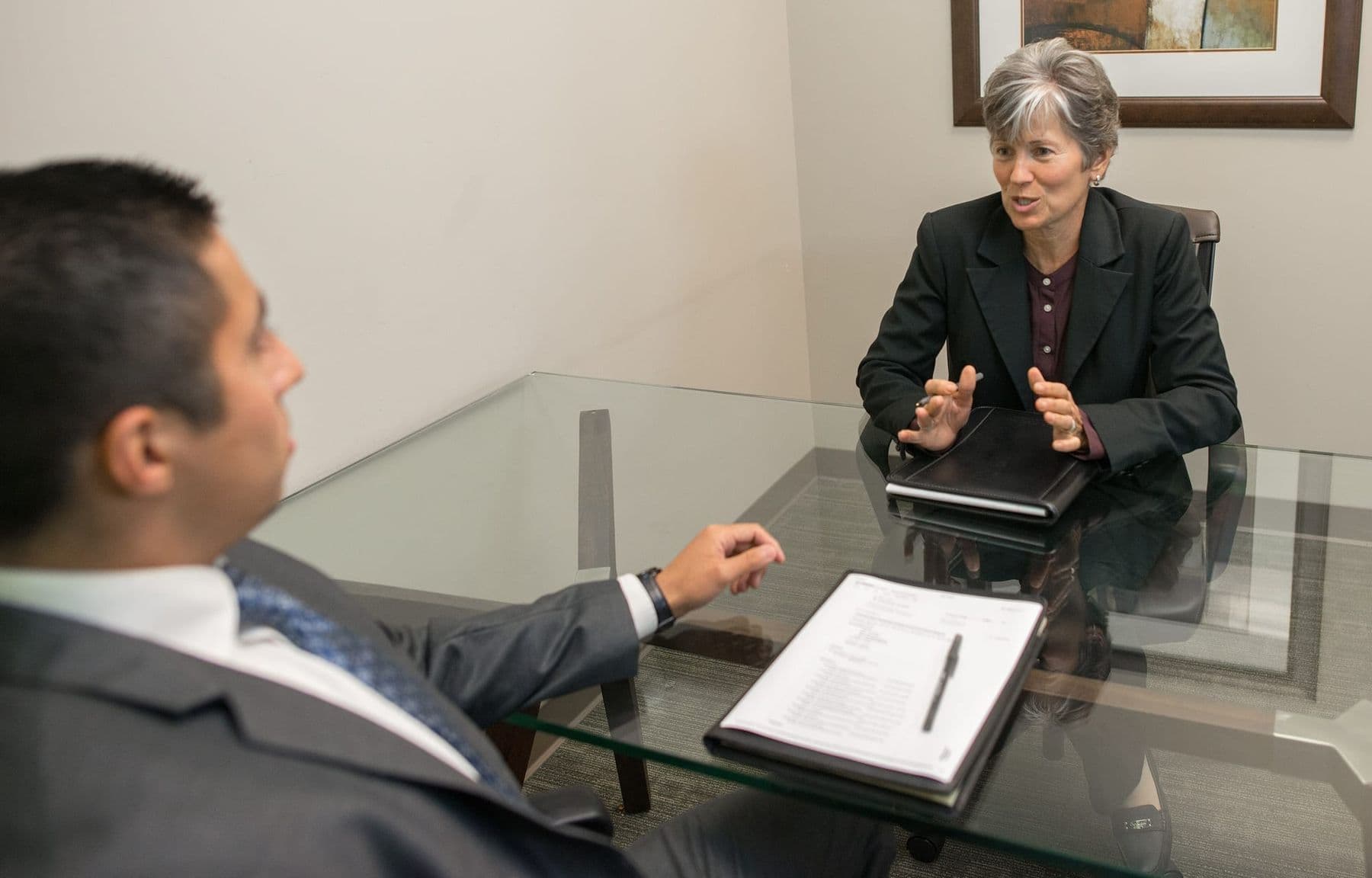
If you record and transcribe interviews, tell the candidate: under Georgia’s Law on Personal Data Protection, people must be told before or at the start of data collection who processes their data, why and for how long (Article 24). Avoid video interview tools that claim to read “emotions” or “honesty” from face or voice: in the EU, emotion recognition at work has been banned since February 2025, except for medical or safety reasons.
Onboarding: a 30-day plan and a policy assistant
New employees ask the same questions: where is the leave form, who fixes my laptop, how is overtime counted. AI helps twice.
The plan. Give AI the job description and team structure and ask for a 30-day plan by week: who to meet, what to learn, the first solo task, check-ins. The manager edits it for realism.
A policy assistant. Put the handbook, leave policy, IT instructions and common questions in one place and let the assistant answer only from them. Use a Claude project (Claude guide), NotebookLM, which cites your sources (NotebookLM guide), or a website or Telegram bot (building a chatbot without code). Four rules:
- Instruct it: “If the answer is not in the documents, say you don’t know and give the HR contact.”
- Never put salaries, health data or disciplinary cases in the knowledge base.
- Before launch, test it with 20 real questions from recent hires.
- When a policy changes, update the document first, or the assistant repeats the old rule.
 Course at TDSAI for Companies: Corporate Program30–50 hoursDetails
Surveys and exit interviews: analysing them anonymously
AI groups 200 open answers into themes in minutes. Try: “Group the answers into 5–7 themes, count the answers in each, and give 2 exact quotes per theme.” The quotes let you check the grouping; recount the numbers in a spreadsheet, as models often miscount.
Anonymity comes first. Before uploading, delete names and details that identify people in a small team (job title, department, length of service). Never ask AI to guess who wrote an answer: it would destroy trust in your surveys overnight.
AI and employment discrimination: what the law says
This is not legal advice; talk to a lawyer or data protection officer before deploying a specific system. As of October 2026, these rules matter most for HR:
| Source | What it says | What it means for HR |
|---|---|---|
| Labour Code, Art. 2 and 7 | No discrimination from the job ad on; burden of proof on the employer | Be able to explain decisions |
| Labour Code, Art. 11 | Only job-related information about candidates | No AI “research” of their social media |
| Data protection law, Art. 19 | Right not to face a solely automated decision | A person decides |
| Data protection law, Art. 31 | Impact assessment required for fully automated decisions | Avoid such systems in HR |
| EU AI Act, Annex III | Recruitment and evaluation AI is high-risk | Applies if output is used in the EU |
Article 19 of Georgia’s Law on Personal Data Protection gives people the right not to be subject to a decision based solely on automated processing, including profiling, with legal or similarly significant effects. Exceptions (explicit consent, a contract, the law) still let the person ask for human review. The State Audit Office supervises the law.
Point 4 of Annex III to the EU AI Act lists as high-risk AI used for recruitment and selection (targeted job ads, filtering applications, evaluating candidates) and for promotion, termination, task allocation and performance monitoring. According to the European Commission, after the AI Omnibus amendment these obligations apply from 2 December 2027; the bans (including emotion recognition at work) and the AI literacy duty have applied since February 2025. The Act is not Georgian law, but it covers non-EU companies whose AI output is used in the EU (Article 2): if you hire for a team in Europe, it concerns you. If not, it is still a useful checklist.
A one-page AI policy for HR
The company’s general AI rules need a separate HR annex, because HR handles the most sensitive data. A template to adapt:
HR AI rules (version 1.0)

1. We use company accounts only: [list of tools].
2. AI drafts, people decide. AI does not decide on hiring,
   rejection, promotion or dismissal.
3. Before uploading CVs or survey answers we remove names, photos,
   age, addresses and personal ID numbers.
4. We never put into AI: salaries, health data, disciplinary
   cases, legal disputes.
5. We tell candidates if an interview is recorded and processed with AI.
6. We do not use tools that rate emotions or “personality”
   from face, voice or writing style.
7. At every hiring stage we record the reason for the decision.
8. We review these rules every 6 months. Owner: [name].Before using any AI tool to assess candidates, run a blind test. Run one CV twice, once with the name Nino and once with Giorgi, then again with the age changed from 26 to 52. If the score, tone or recommendation changes, the tool is not fit for assessing candidates.
Frequently asked questions
Can AI screen CVs?
Technically yes, but automatic screening is risky: research shows models are biased by names, gender and other signals. It is safe when AI only builds a table comparing each CV with your criteria and a person reads every CV and decides.
Is it legal to assess candidates with AI in Georgia?
The law does not ban AI as a supporting tool. But the Labour Code prohibits discrimination at the selection stage, and the data protection law gives people the right not to be subject to a solely automated decision. For a specific case, ask a lawyer.
Can I paste employee data into ChatGPT?
Not into a personal, free account. In a business account, share only what the task needs and remove names and ID numbers first. Salaries, health and disciplinary data should not go into AI at all.
What are the best AI HR tools?
The ones that fit your systems and have a business plan: Gemini for Google Workspace companies, ChatGPT or Claude for others. Compare Georgian quality on the same task in two tools. For a policy assistant, try NotebookLM or a Claude project.
Will AI replace HR managers?
It saves time on text, but the core of HR (talking to people, resolving conflicts, deciding) stays human, and decisions are where AI is riskiest and most restricted by law.
Next step
AI works best in HR when its rules and assistants are set up with the rest of the company. To train HR, sales and other teams in Tbilisi in one program, see our corporate training or the AI for Companies: Corporate Program, which starts by studying your processes and runs 30–50 hours. Not sure which fits? Contact us for a free consultation.
Sources
- Labour Code of Georgia, Legislative Herald of Georgia
- Law of Georgia on Personal Data Protection, Legislative Herald of Georgia
- AI Act, Annex III: High-risk AI systems, European Commission AI Act Service Desk
- AI Act, Article 5: Prohibited AI practices, European Commission AI Act Service Desk
- AI Act, Article 2: Scope, European Commission AI Act Service Desk
- AI Act: regulatory framework and timeline, European Commission
- AI tools show biases in ranking job applicants’ names, University of Washington News
- Supported languages for Microsoft 365 Copilot, Microsoft Support