







A drone course for teens teaches why a drone flies, how to assemble an aircraft from parts, how to program a DJI Tello with blocks and Python, and how to turn aerial photos into a 3D model. The best age is 13–17: by then a teenager can handle physics formulas, code and safety rules at the same time.
A drone is an unusual learning tool. One project combines physics, electronics, programming, geography and responsibility. This guide explains what teens learn, what drone programming looks like, which rules apply in Georgia, and which careers the hobby can lead to.
What do teens learn on a drone course?
A good drone course is more than a flying lesson. Students start with physics, move on to parts and code, and finish by using the drone on a real task. A typical programme covers:
- Flight physics: lift, thrust, weight and balance;
- Types of unmanned aircraft (UAV): multicopters, fixed-wing planes, hybrids;
- Components: frame, motors, ESCs, flight controller, battery, radio;
- Flying and programming a DJI Tello with blocks and Python;
- Practising in a simulator before a real aircraft leaves the ground;
- Photogrammetry: building 3D models and maps from photos;
- Airspace rules, no-fly zones and safety.
| Skill | What it looks like in practice | School subject |
|---|---|---|
| Flight physics | Calculating thrust against weight | Physics |
| Programming | A Tello flies a square | Computer science |
| Building | Motors, wiring, configuration | Technology |
| Photogrammetry | A 3D model of the schoolyard | Geography, maths |
| Rules | Flight plan and airspace check | Civics |
How does a drone fly? The physics, simply
A quadcopter has four propellers. Two spin clockwise and two anticlockwise. That matters: if all four turned the same way, the drone itself would start to spin. The flight controller measures tilt hundreds (often thousands) of times a second with a gyroscope and accelerometer and adjusts the speed of each motor.
The three control axes work like this:
- Pitch (tilt forward or back): the rear motors speed up and the drone moves forward;
- Roll (tilt sideways): the motors on one side speed up and the drone slides sideways;
- Yaw (turn on the spot): the props spinning one way speed up, the others slow down, and the drone rotates.
The first problem a teen solves: how much thrust does the drone need? Builders aim for total thrust at least twice the aircraft’s weight; with less, the drone feels sluggish and struggles in wind. A 400 g quadcopter therefore needs more than 800 g of combined thrust, or over 200 g per motor.
Programming a DJI Tello: from blocks to Python
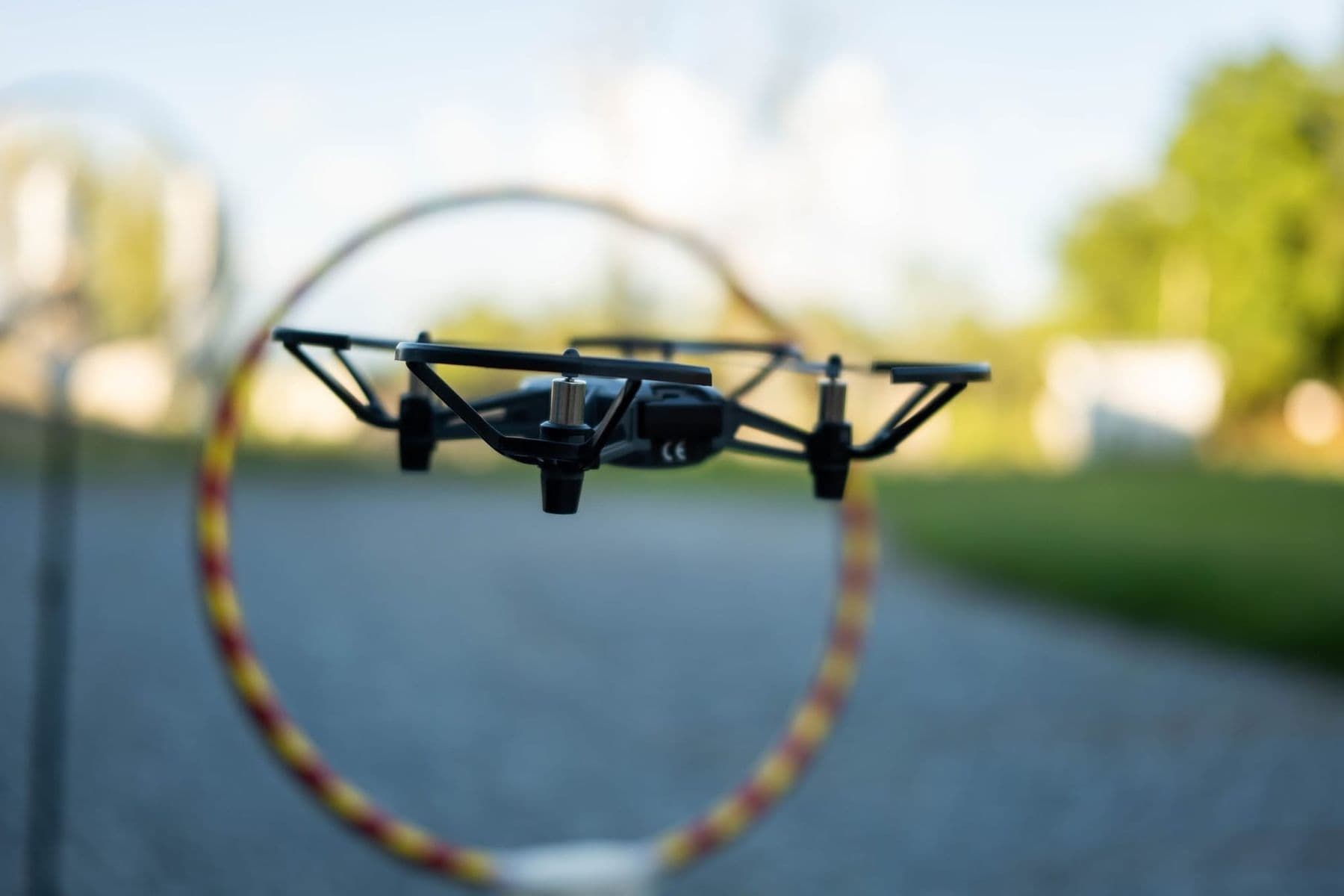
The DJI Tello (a small drone from Ryze Tech) weighs about 80 g with propellers and battery, flies for up to 13 minutes and has a 5 MP camera. It is good for learning because it is light, has prop guards and can be controlled by code.
Beginners start with Scratch-style blocks: “take off”, “forward 100 cm”, “turn 90°”, “land”. The Tello EDU version also supports Python, Swift, flying several drones together (a swarm) and Mission Pads, markers the drone recognises with its camera.
The next step is Python. The open-source DJITelloPy library uses the official Tello SDK, and the code is very short:
from djitellopy import Tello

tello = Tello()
tello.connect()
print("Battery:", tello.get_battery(), "%")

tello.takeoff()
for _ in range(4):           # a square with 1 m sides
    tello.move_forward(100)  # distance in centimetres
    tello.rotate_clockwise(90)
tello.land()
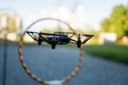
In these few lines a teen practises loops, function calls, units and geometry at once. Then the tasks get harder: fly through a hoop, find a marker with the camera, launch two drones in sync. If your child is just moving from blocks to real code, read our guide on moving from Scratch to Python.
Always run new code at low height in an empty room. Put a battery check at the top of the script: if the charge is under 20%, the drone does not take off. Keep an emergency key ready that makes the drone land immediately.
FPV simulators and building a drone
FPV (First Person View) means flying with goggles, seeing through the drone’s camera. It is the most exciting and the hardest style of flying, so before touching a real FPV drone, teens practise in a simulator with a real radio plugged into the computer. Crashes in a simulator cost nothing, and the skill transfers to real flight.
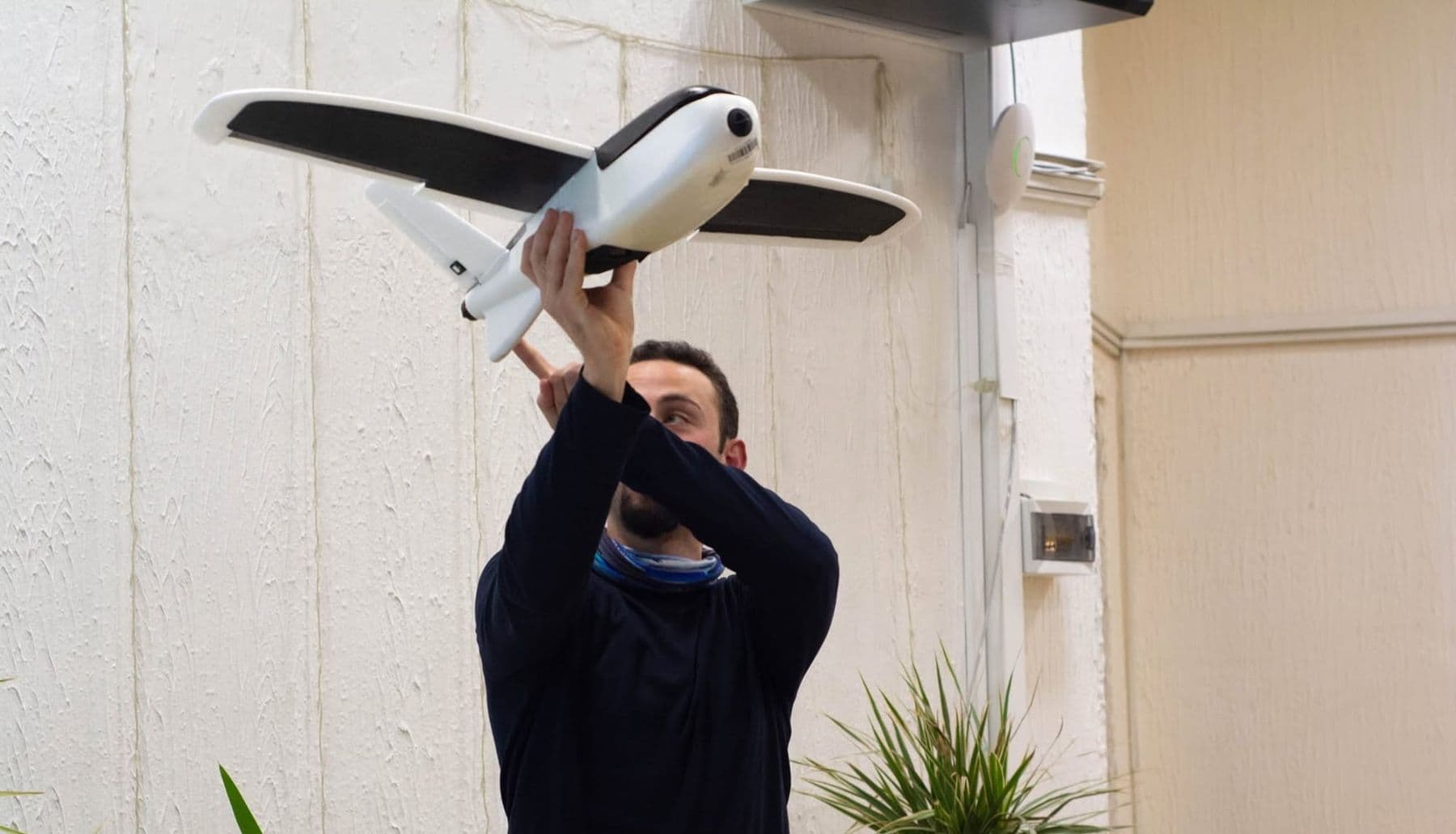
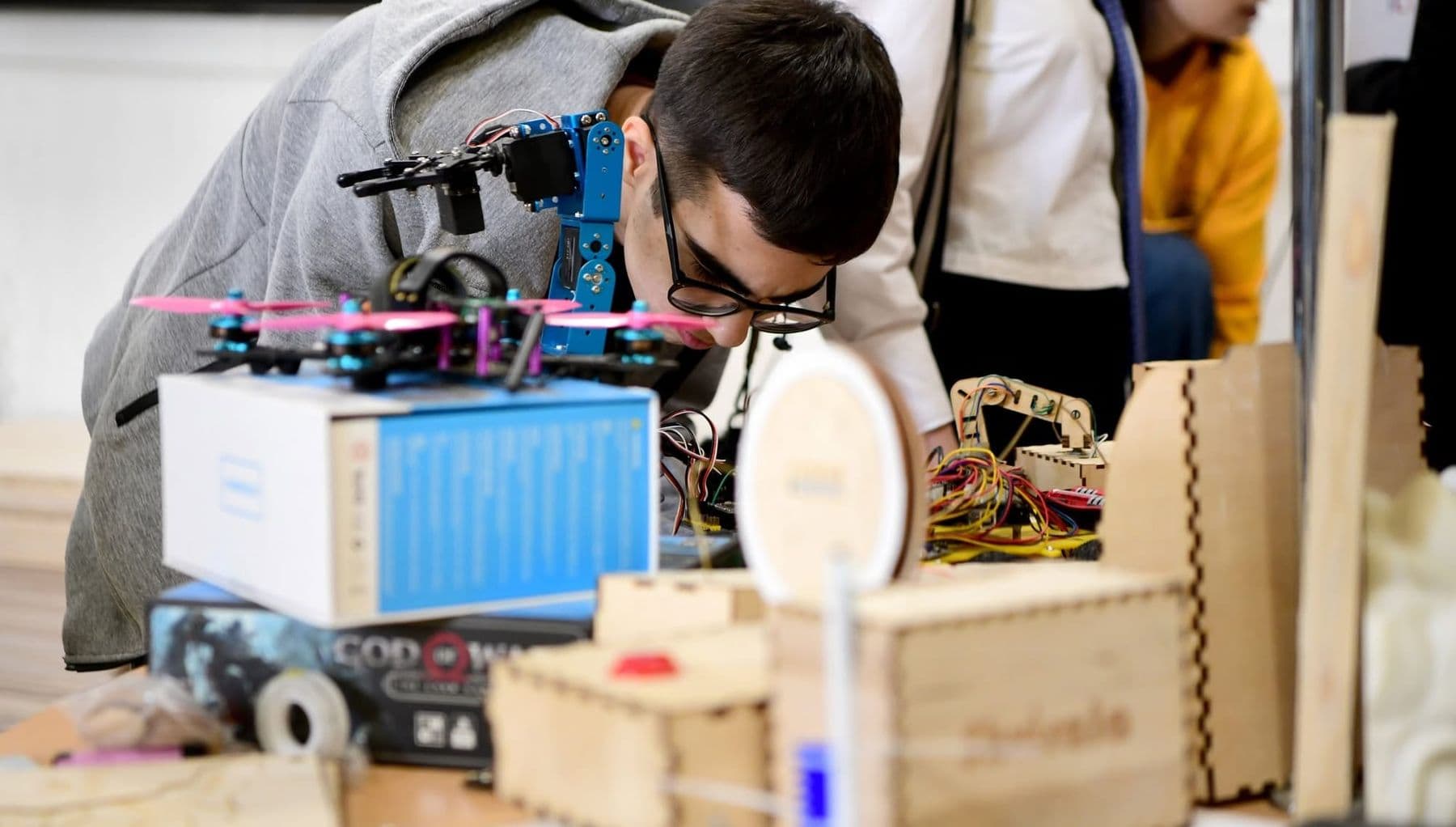
Building shows a student that a drone is a system: frame, four motors, motor controllers (ESCs), flight controller, receiver and LiPo battery. Every part has a job, and every mistake has a price. Detailed steps, a parts table and a first-flight checklist are in our guide on how to build a drone.
At a more advanced level, teens meet ArduPilot, an open-source autopilot that flies multicopters, planes and other vehicles automatically along a pre-planned route. That is how mapping and research drones work.
Photogrammetry: the drone as a 3D scanner
Photogrammetry turns many overlapping photos of an object into a 3D model or an accurate map. The drone flies over a yard, a building or a valley and takes hundreds of photos, and software reconstructs the surface. For a teenager it is a first taste of the work surveyors, architects and archaeologists do. The steps and free software are covered in photogrammetry: from drone photos to a 3D model.
Safety and the law: what teens need to know
Drone flights in Georgia are regulated by the Georgian Civil Aviation Agency (GCAA). According to its official information:
- A drone with a maximum take-off mass of 250 g or more must be registered on the uas.gov.ge portal (registration is free);
- In the “open” category the pilot passes an online test, and flights generally must stay below 120 m above the ground;
- The operator’s registration number must be shown on the outside of the drone;
- The drone must stay within the pilot’s visual line of sight, and flying over gatherings of people is only allowed with the agency’s authorisation;
- Prohibited and restricted zones are shown on the GCAA map at airspace.gov.ge: always check that your spot is not inside one before you fly.
The Tello is below the registration threshold (about 80 g), but the general flying rules still apply: no flying over people, and never lose sight of the drone. Add a rule of good manners: do not film other people’s gardens and windows. Rules change, so always check the official source before flying. For parents we have a short guide: drones for kids: 8 safety rules.
What age is a drone course for?
For younger children (8–12), drones mean a small, guarded drone and a simulator with an adult watching. From 13, the full programme becomes realistic: formulas, code, building and an independent project. A teen is ready if they:
- Can focus on one task for an hour and a half;
- Follow instructions and rules even when it feels boring;
- Want to know how things work, not just play;
- Have tried block coding before (not required, but it helps).
Children aged 10–14 meet the Tello drone on our robotics course, alongside other robots: see it and the courses for other ages on our robotics courses for kids page.
How to start at home: the first four weeks
If you want to test your teen’s interest before a course, try this simple plan:
- Week one: a free or low-cost simulator and a radio. Goal: 10 minutes of flying without a crash, and turning the drone nose-towards-you.
- Week two: the safety rules and the GCAA map at airspace.gov.ge. Let your teen find a spot in your area where flying is allowed.
- Week three: a small programmable drone, flying with blocks: take off, fly a square, land.
- Week four: the same task in Python, plus one idea of their own, such as flying through a hoop.
If the interest is still there after four weeks and questions appear (“why does it drift in the wind?”, “how do I build a faster one?”), your teen is ready for structured learning.
Where it leads: drones and careers
Flying a drone is rarely a career on its own. What counts are the skills around it. Photogrammetry and mapping are used in construction, land registry, agriculture and archaeology. Inspection (bridges, power lines, solar farms), film and media, search and rescue: all need people who fly safely and process data correctly. For a teenager, drones open a friendly door into engineering, programming and geographic information systems (GIS).
A drone course in Tbilisi
At Tbilisi Digital School, the course Drones: Building, Coding and Photogrammetry is for ages 13–17 (intermediate level, 2 months, 32 hours, on-site, in Georgian). It covers UAV types and components, flying and programming a DJI Tello with blocks and Python, building an RC plane, photogrammetry, a research drone with ArduPilot and a team flight, along with airspace rules and safety. The components are included, and the aircraft each student builds is theirs to keep.
 Course at TDSDrone Course: Tello, ArduPilot and FPV7 months · 3 phases · 72 h · Starts 21 NovDetails
Frequently asked questions
What age can a child start flying drones?
With a small guarded drone and a simulator, from about 8–10, with an adult watching. Building a drone, coding it in Python and flying real missions is realistic from 13, when a teen can stay focused and follow rules on their own.
Do you need to register a drone in Georgia?
According to the GCAA, drones with a maximum take-off mass of 250 g or more must be registered. Registration is free on the uas.gov.ge portal, and pilots in the open category also pass an online test. Rules can change, so check the official source before you buy.
Which drone should a beginner teen buy?
Make the first drone light (under 250 g), with prop guards and ideally programmable, like the DJI Tello. A big camera drone is an expensive mistake for a beginner: simulator and small drone first, everything else later.
Does a drone course require coding experience?
No. Programming starts with blocks and moves to Python step by step. If a teen has used Scratch before, the first weeks go faster.
Is it better to buy a drone or build one?
For learning you need both. A ready-made drone like the Tello is for coding and safe flying. Building teaches how each part works and how to fix things when they break, which is why a good course includes both.
Next step
If your teen is into drones, start simple: a simulator, the safety rules and one small programmable drone. If you want them to learn building, coding and photogrammetry properly with a mentor, book a free consultation and we will tell you whether the course fits your child’s age and experience.
Sources
- Unmanned Aircraft Systems portal, Georgian Civil Aviation Agency
- Agency launches online platform for registration of unmanned aircraft, GCAA
- Airspace map, Georgian Civil Aviation Agency
- Tello Specs, Ryze Robotics
- Tello EDU, Ryze Robotics
- DJITelloPy: DJI Tello drone Python interface, GitHub
- Copter Home: Introduction, ArduPilot