








An adult can learn robotics from zero in about six months with 5–7 hours a week. The path is: electronics basics, Arduino and C++, motors and sensors with a first robot, mechanics and 3D design, then Python and ROS 2, and finally a project of your own. Most of the learning can be done with free resources, and starter equipment costs roughly 130–300 GEL in Georgia.
Robotics is not just for kids. Adults even have advantages: they remember school maths, can plan their time and usually know why they want the skill, whether that is a career change, automating something at work or building robots with their children. The plan below is for people starting from scratch.
Can you learn robotics as an adult?
Yes, and age is no barrier: the knowledge you need to begin is within the school curriculum, and you pick up the rest along the way. What you really need:
- school-level maths: proportions, formulas, and later trigonometry for robot arms;
- basic physics: voltage, current, force and torque, which you will revisit as you go;
- patience: robots rarely work on the first try, and that is normal;
- regularity: two hours three times a week beats one long Saturday a month.
An engineering or IT background speeds things up but is not required. Programmers will have to learn electronics, engineers code and designers both: everyone starts something from zero.
A 6-month plan to learn robotics step by step
| Month | Topic | Hands-on result |
|---|---|---|
| 1 | Electronics basics: Ohm's law, breadboard, multimeter | LED circuits, a button, measuring voltage |
| 2 | Arduino and C++: digital and analog pins, PWM, Serial | A temperature monitor, a servo controlled by a knob |
| 3 | Motors, drivers, sensors | An obstacle-avoiding robot |
| 4 | Mechanics and 3D design: Fusion 360, 3D printing | Custom brackets, a 3–4 joint robot arm |
| 5 | Linux, Python and ROS 2 basics | Controlling a robot in simulation, nodes and topics |
| 6 | Final project | A robot you design and finish yourself |
Month 1: electronics. Start with Ohm's law: voltage equals current times resistance (V = I × R). A worked example: you power an LED from 5 V, the LED drops 2 V and needs 20 mA, so the resistor should be (5 − 2) / 0.02 = 150 ohms. This one formula explains half of your first weeks. Read more in electronics basics: Ohm's law. Try circuits first in the free Tinkercad Circuits simulator, then on a real breadboard.
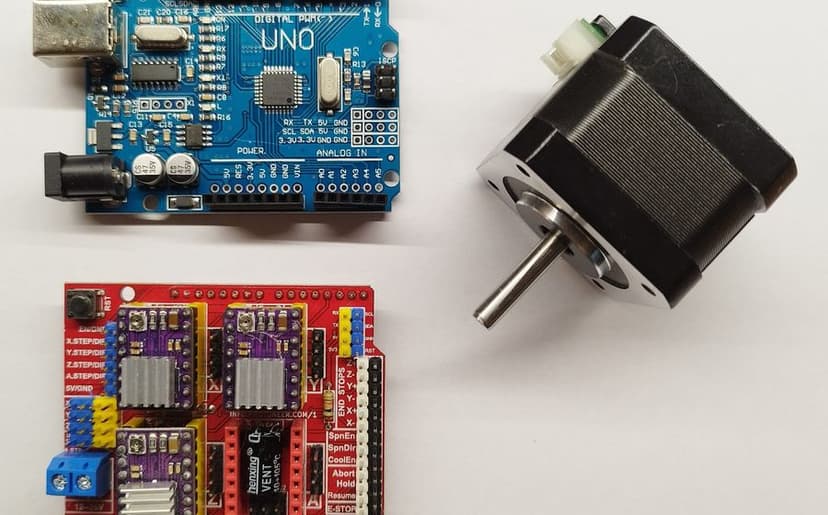
Month 2: Arduino. Learn digitalWrite, analogRead, analogWrite (PWM), Serial.print and libraries, and build one small device every week. Our Arduino for beginners guide shows where to start.
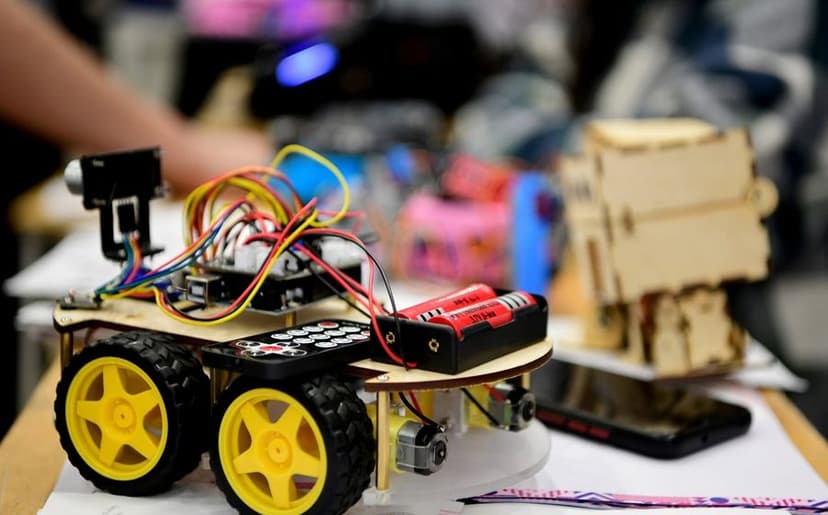
Month 3: your first robot. Two motors, a driver, an ultrasonic sensor and 18650 cells. Follow the complete guide with code, a wiring table and common faults: how to build your first robot with Arduino.
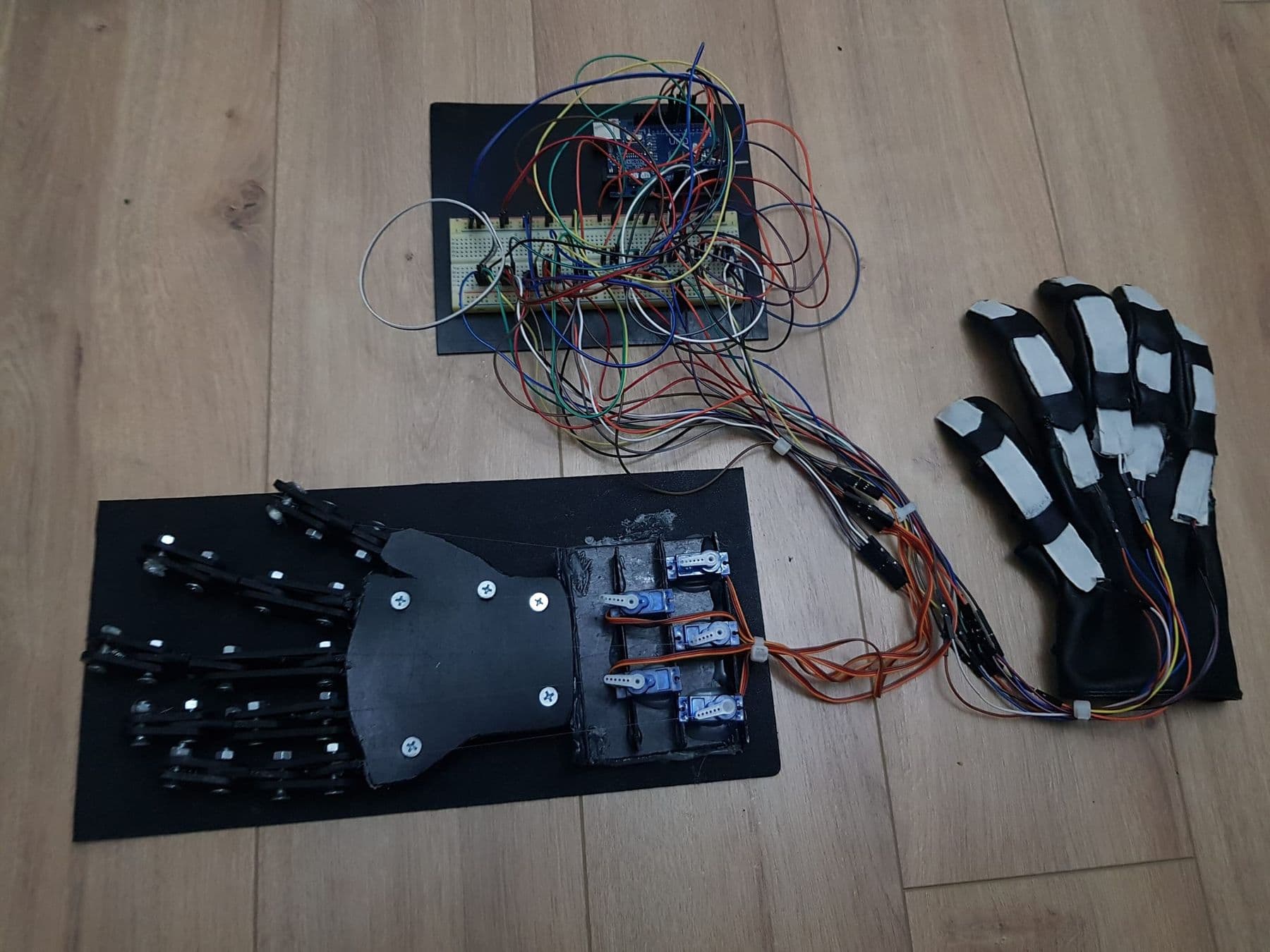
Month 4: mechanics. A robot is not only electronics. Learn 3D modelling in Fusion 360, print a sensor bracket, then robot arm parts. Understand why the “shoulder” of an arm needs a stronger servo than the “wrist”: the servo's torque has to beat the load's weight multiplied by the arm's length.
Month 5: ROS 2. ROS 2 (Robot Operating System) is the open platform that universities and companies use to build complex robots. It is not an operating system but a set of libraries and tools: parts of the robot run as separate “nodes” that talk to each other over “topics”. As of 2026 the latest long-term support (LTS) release is Lyrical Luth, released on 22 May 2026 and supported until May 2031, with Ubuntu 26.04 as its main platform. ROS 2 needs Python and the Linux command line, so spend the first weeks of this month on them. You do not need a real robot to start: everything begins in simulation.
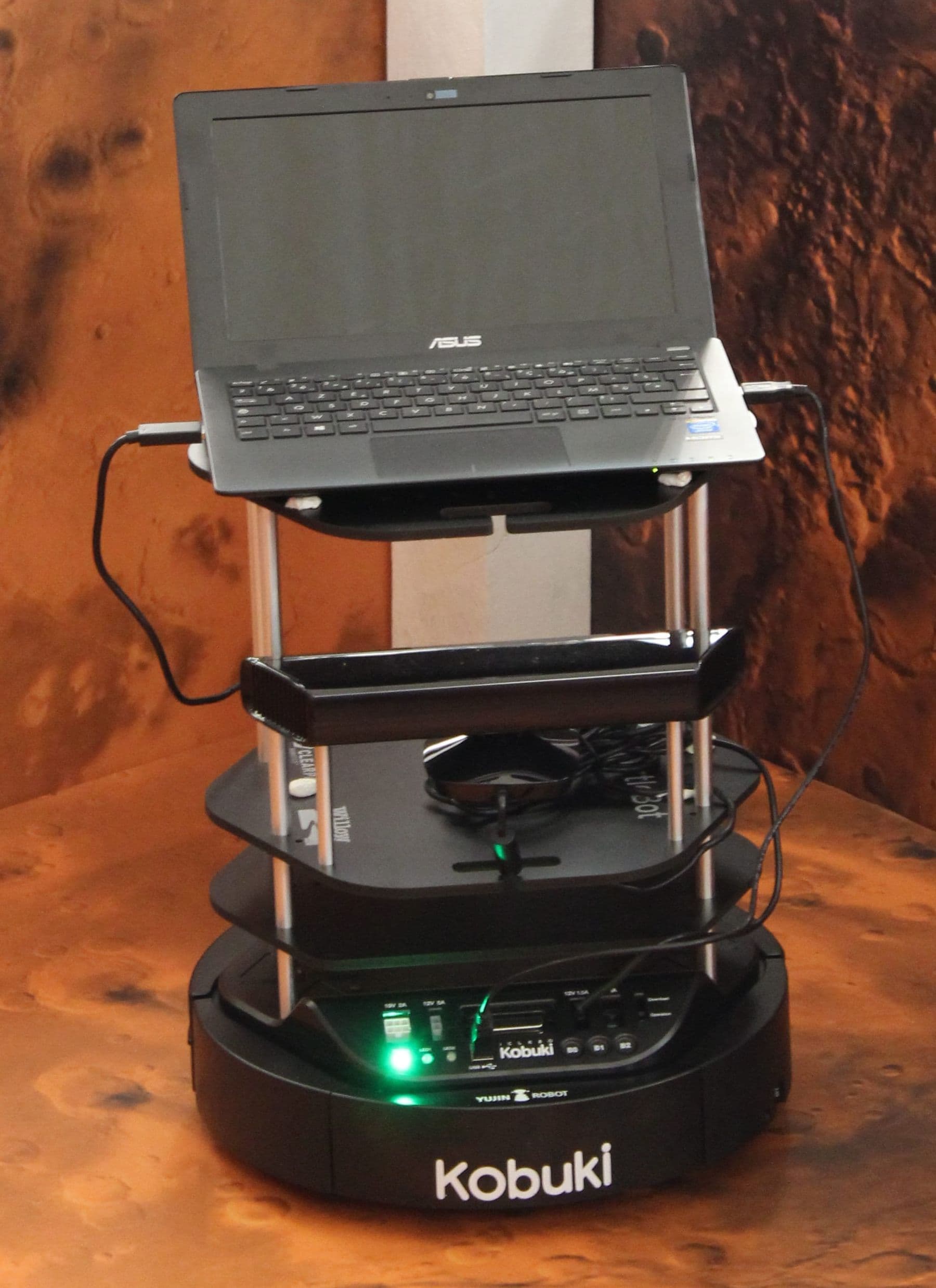
Month 6: your own project. Pick something you need or love: a line follower with a PID controller, a phone-controlled robot arm, an automatic plant-watering system or a mobile robot on a Raspberry Pi. Document it with photos, a schematic and code on GitHub. That is the first page of your portfolio.
Robotics and coding: which programming language should you learn?
| Language | Where it is used | When to learn it |
|---|---|---|
| C++ (Arduino) | Microcontrollers, direct control of motors and sensors | In the first months |
| Python | ROS 2, Raspberry Pi, computer vision, AI | Once Arduino makes sense |
| Blocks (mBlock, Scratch) | Quick prototypes, learning alongside a child | Optional |
The two main languages complement each other. A microcontroller running C++ drives the “muscles”, while a Python program on a more powerful computer does the thinking: planning a route or analysing camera images.
Free resources to learn robotics
- Arduino's official examples are built into the IDE (File, then Examples), and the documentation is at docs.arduino.cc.
- Tinkercad Circuits: a free browser simulator where you wire up an Arduino and sensors and test code before buying hardware.
- Official ROS 2 tutorials at docs.ros.org, from installation to your first nodes.
- MIT OpenCourseWare, “Introduction to Robotics” (2.12): MIT course materials, free and openly licensed.
- “Modern Robotics” (Lynch and Park, Northwestern University): a free preprint PDF of the textbook and video lectures linked from the book's page. This is university level, so it fits best after month five.
Build your learning around a project, not around lessons. Decide what robot you want first, then learn exactly what it needs. Write down every week what you did and what did not work. In three months these notes will be invaluable. Find a learning partner or an online community: people learning alone are the ones who most often stall halfway.
6 common beginner mistakes and how to avoid them
- A first project that is too hard. A humanoid robot in month one ends in frustration. Start with a two-wheel robot and add complexity step by step.
- Expensive gear up front. Buy a 3D printer, a Raspberry Pi or a lidar when a specific project needs it.
- Only watching videos. Every hour of video should be followed by two hours of hands-on work, or the knowledge will not stick.
- Ignoring power. A flat battery or a forgotten common GND is the most common cause of “mysterious” bugs. Check the voltage first, then the code.
- Copying code without understanding it. Change one parameter in code you found and watch what changes. That is how you learn instead of just copying.
- Forgetting safety. Charge lithium cells only with a proper charger and under supervision, ventilate the room and wear safety glasses when soldering. Beginners should never touch mains (220 V) wiring.
How much does learning robotics at home cost?
As a rough 2026 guide for Georgia, an Arduino starter kit costs about 60–150 GEL, the parts for a first robot including a charger about 130–280 GEL, and a digital multimeter 30–80 GEL. Prices are approximate and vary by shop. A Raspberry Pi and a 3D printer are not needed at the start. For a detailed list, see robot components: what you need and what it costs.
Robotics and careers: where will these skills help?
According to the International Federation of Robotics (IFR), more than 600,000 industrial robots were installed worldwide in 2025, and the number in operation reached 5 million. These systems need people to design, program and maintain them. Six months of self-study does not replace an engineering degree, but it opens several doors:
- automation at your own job: sensors, monitoring and simple devices at a plant or office;
- technician roles: setting up and servicing machines, robots and 3D printers;
- embedded systems: a natural next step for programmers;
- formal education: if you love it, bachelor's and master's programmes in mechatronics or automation.
For more on the field and its careers, read what is mechatronics.
Where can adults learn robotics in Tbilisi?
To be straightforward: we do not currently run a separate robotics course for adults; our robotics courses are for students aged 7–17.
We do offer an adult course that builds skills robotics depends on: 3D Design & 3D Printing, with parametric modelling in Fusion 360, tolerances and parts that fit together, exactly what you need for robot bodies and brackets. How a precise mechatronic machine moves is easy to see on a CNC router: CAM, cutting parameters and G-code are explained in what a CNC machine is and how it works.
If you have a child aged 8–12, you can try robotics together at the masterclass Kid + Parent: Build a Moving Robot, where a parent and child build and program a robot side by side.
Frequently asked questions
How long does it take to learn robotics?
With 5–7 hours a week you can learn the basics (electronics, Arduino and a first moving robot) in 2–3 months. Reaching ROS 2 and your own project takes about six months. Professional level takes years of practice, as in any engineering field.
Can I learn robotics at 40?
Of course. The basics of robotics have no age limit, and adults often bring more motivation and organisation. What matters is regular practice and small projects you can finish.
Arduino or Raspberry Pi: which should I start with?
Arduino. It is a microcontroller that talks directly to sensors and motor drivers, and it teaches electronics best. A Raspberry Pi is a full Linux computer, useful once you need a camera, ROS 2 or heavier computing. Many robots use both together.
Do I need an engineering degree to learn robotics?
No. Through self-study and projects you can build real, working robots and a portfolio. If you want to work as an engineer in industry, most employers expect an engineering degree, but for hobby, automation and technician roles practical experience often counts most.
Are there Arduino courses for adults?
We do not currently offer a dedicated Arduino course for adults; at our school, Arduino and electronics are taught in courses for ages 10–17. For adults, the plan and free resources above are a good path, and if you want advice for a specific goal, get in touch.
How to start today
Take a sheet of paper and write down what robot you want to build in six months. Then order a starter kit and spend the first week on Ohm's law and LEDs. If you would like our team to help you plan or choose a suitable course, book a free consultation.
Sources
- ROS 2 Lyrical Luth Released, Open Robotics Discourse
- Introduction to Robotics (2.12), MIT OpenCourseWare
- Modern Robotics: Mechanics, Planning, and Control, K. Lynch and F. Park, Northwestern University
- Mechatronics Engineers (17-2199.05), O*NET OnLine
- Five Million Robots Now Operate in Factories Globally, International Federation of Robotics
- Arduino UNO R3: Tech Specs, Arduino