
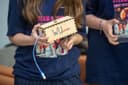




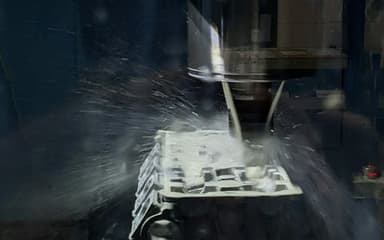


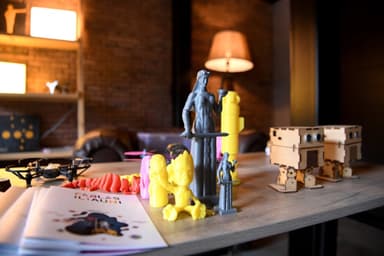
What should you 3D print? The best ideas are objects that solve a real problem and print in a few hours: cable clips, a drawer organiser, a name keychain, a plant pot, a teaching model or a replacement handle. Below are 40 ideas in four groups (home, gifts, school and selling), each with a material, a difficulty level and a short tip.
Many new printer owners print ten figurines in the first week, and then the printer gathers dust on a shelf. To avoid that, look for ideas in everyday needs: where you lack organisation, what broke, what you could give someone close to you.
How to read difficulty in the tables: easy prints without supports from a ready model, medium needs tuned settings or a little modelling, hard means a big print, assembly or finishing work.
What to 3D print: how to choose an idea
Before you look at the tables, ask four questions:
- Will I use it every day? Useful objects give the most satisfaction.
- Does it fit my printer? If not, it can be printed in parts and assembled.
- How long will it take? The slicer shows the exact time. To start, choose prints of one or two hours.
- Which material does it need? Sun, heat, water or load change the choice.
Materials are explained in detail in PLA, PETG or ABS. In short: PLA is easiest for home and gifts, PETG or ASA is better outdoors, in the sun or in hot places, and TPU is for soft objects.
10 ideas for the home
| Idea | Material | Difficulty | Tip |
|---|---|---|---|
| Desk cable clips | PLA | Easy | Size them to your cable |
| Wall hook | PETG | Easy | Print it on its side so layers do not split |
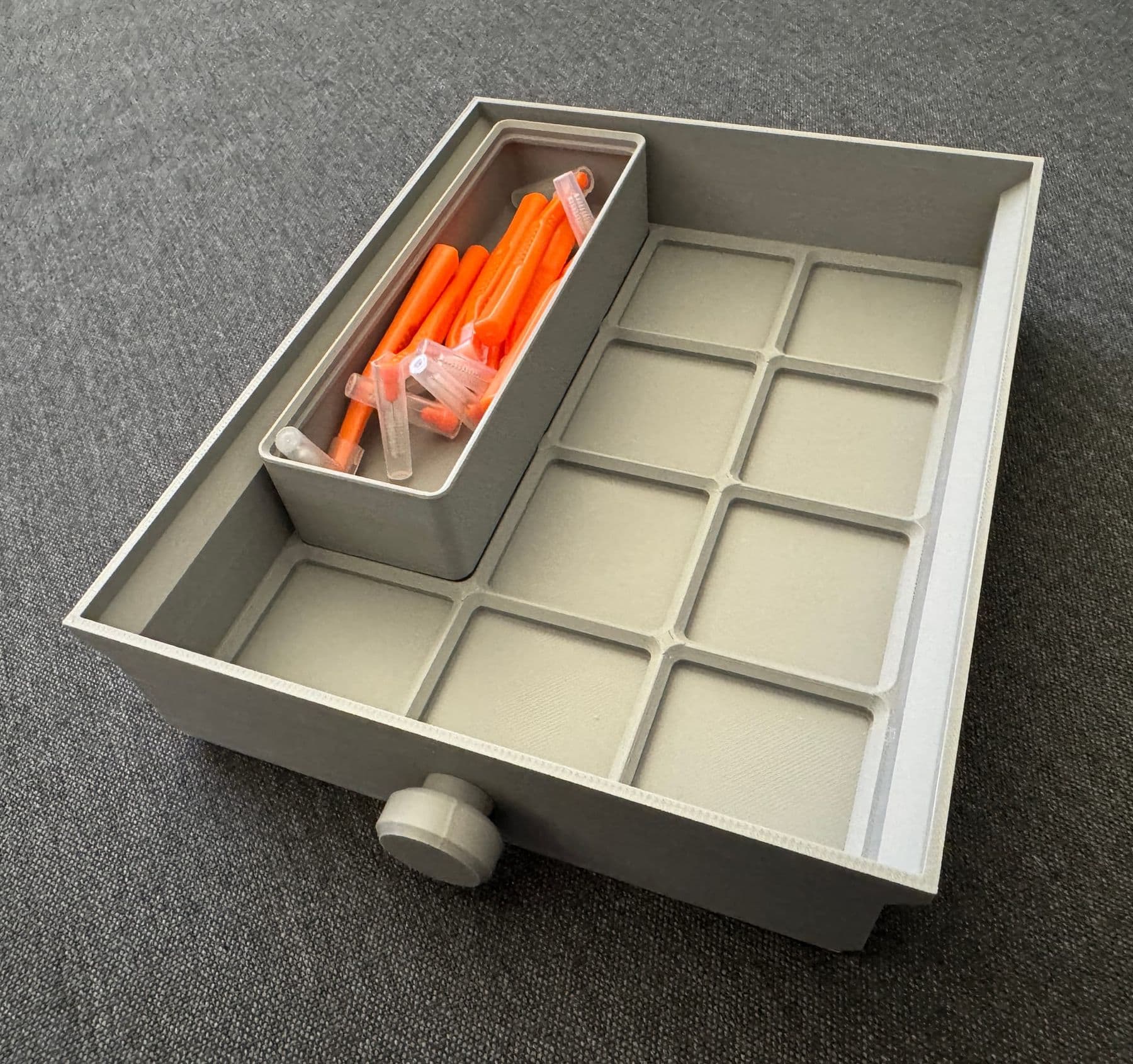
| Gridfinity drawer organiser | PLA | Easy | Baseplate first, then bins as needed |
| Phone or tablet stand | PLA | Easy | Make the slot 1 mm wider than the phone |
| Plant pot with saucer | PETG | Medium | Handles water and sun better than PLA |
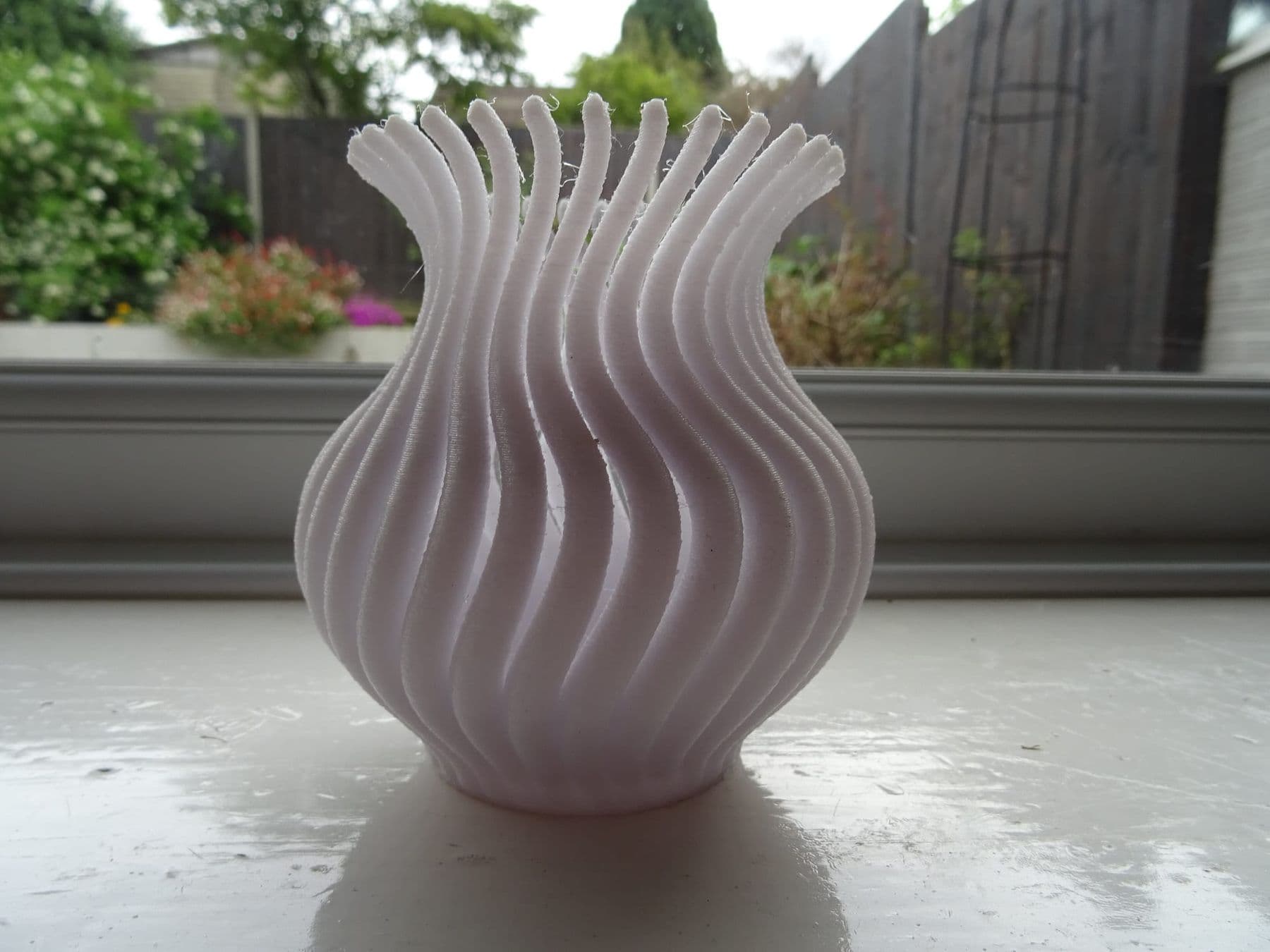
| Twisted vase | PLA | Easy | Prints with a single wall in vase mode |
| Replacement handle or knob | PETG | Medium | Measure the old part with calipers |
| Wall tool holder | PETG | Medium | 3–4 walls, 20–25% infill |
| Bag clips | PLA | Easy | Print many at once on one bed |
| Lampshade | Light-coloured PLA | Medium | Only with an LED bulb, which runs cooler |
Vase mode (called "spiral vase" in some slicers) deserves a word: the printer prints the model as one continuous spiral with a single wall, a solid bottom and an open top. It is light and quick, but a thin wall does not always hold water, so put a glass inside for fresh flowers.
Gridfinity is an open, modular storage system: a baseplate sits in the drawer and bins fit into it in any combination. The community wiki at gridfinity.xyz lists online generators where you enter your drawer size and get ready files.
10 3D printed gift ideas
| Idea | Material | Difficulty | Tip |
|---|---|---|---|
| Name keychain | PLA | Easy | Name in another colour with a layer colour change |
| Lithophane (a photo that shows in light) | White PLA | Medium | Print upright with fine layers |
| Personalised bookmark | PLA | Easy | 1.5 mm thickness is enough |
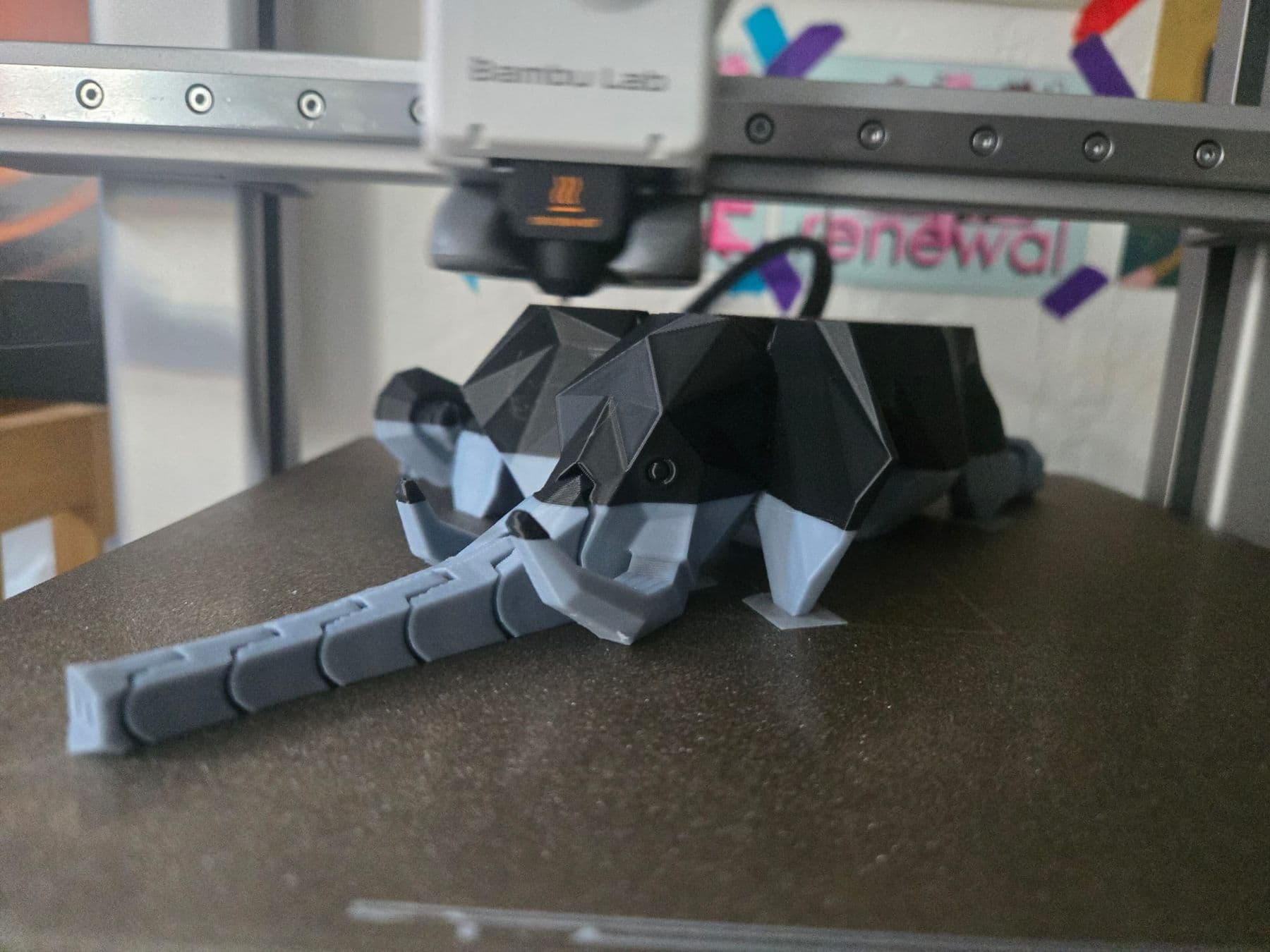
| Articulated animal or dragon | PLA | Medium | Prints already assembled (print-in-place) |
| Desk organiser with a name | PLA | Easy | Easy to design even in Tinkercad |
| Set of coasters | PLA or TPU | Easy | TPU does not slide on the table |
| Headphone stand | PETG | Medium | A heavy base or rubber feet underneath |
| Figure or bust | PLA | Hard | Fine layers and well-planned supports |
| Card holder | TPU | Medium | Slow printing, little retraction |
| Puzzle or folding toy | PLA | Medium | 0.2–0.3 mm clearance between parts |
10 3D printing ideas for school and kids
| Idea | Material | Difficulty | What it teaches |
|---|---|---|---|
| 3DBenchy test boat | PLA | Easy | How a printer works |
| Geometric solids | PLA | Easy | Volume, faces, symmetry |
| Gear mechanism | PLA | Medium | Gear ratios |
| Molecule or DNA model | PLA | Medium | Hands-on chemistry and biology |
| Spacecraft model | PLA | Medium | Astronomy, engineering |
| Relief map | PLA | Medium | Geography, scale |
| Small catapult | PLA | Medium | Physics, energy |
| Marble run | PLA | Medium | Slope, speed |
| Robot or sensor case | PETG | Medium | Electronics and design |
| Tactile plates | PLA | Medium | Inclusive learning materials |
For teachers, the best projects start with a question and end with a print: "why does the small gear spin faster?", "what does a water molecule look like?". The printed model makes the idea tangible, and designing it is a lesson in itself.
Two reliable sources for school: the official 3DBenchy site, with the boat file and instructions for measuring it, and NASA's 3D Resources, with free models of spacecraft, planets and asteroids, including printable ones.
10 3D printing ideas to sell
| Idea | Material | Difficulty | Watch out for |
|---|---|---|---|
| Name tags and keychains | PLA | Easy | Fast personalisation from one template |
| Cookie cutters | PLA | Easy | Short contact with food only, no hot-water washing |
| Pots and vases | PETG | Medium | Your own design, a colour series |
| Board game organisers | PLA | Medium | Exact fit for a specific game |
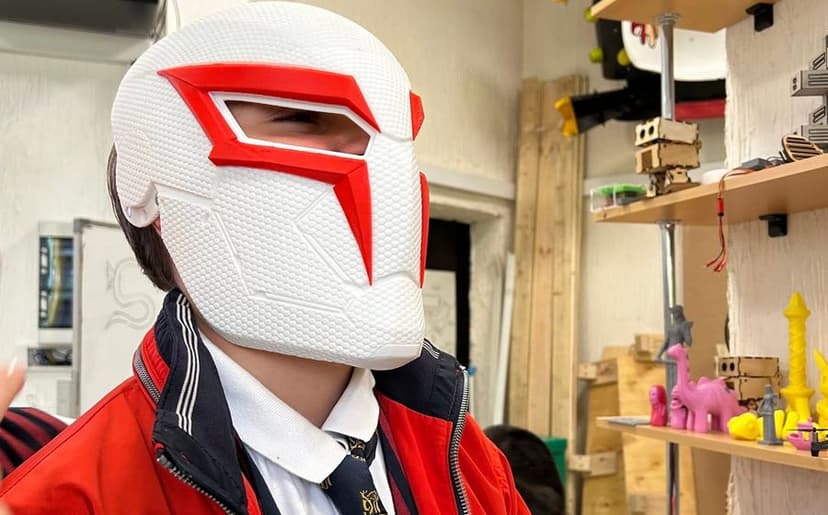
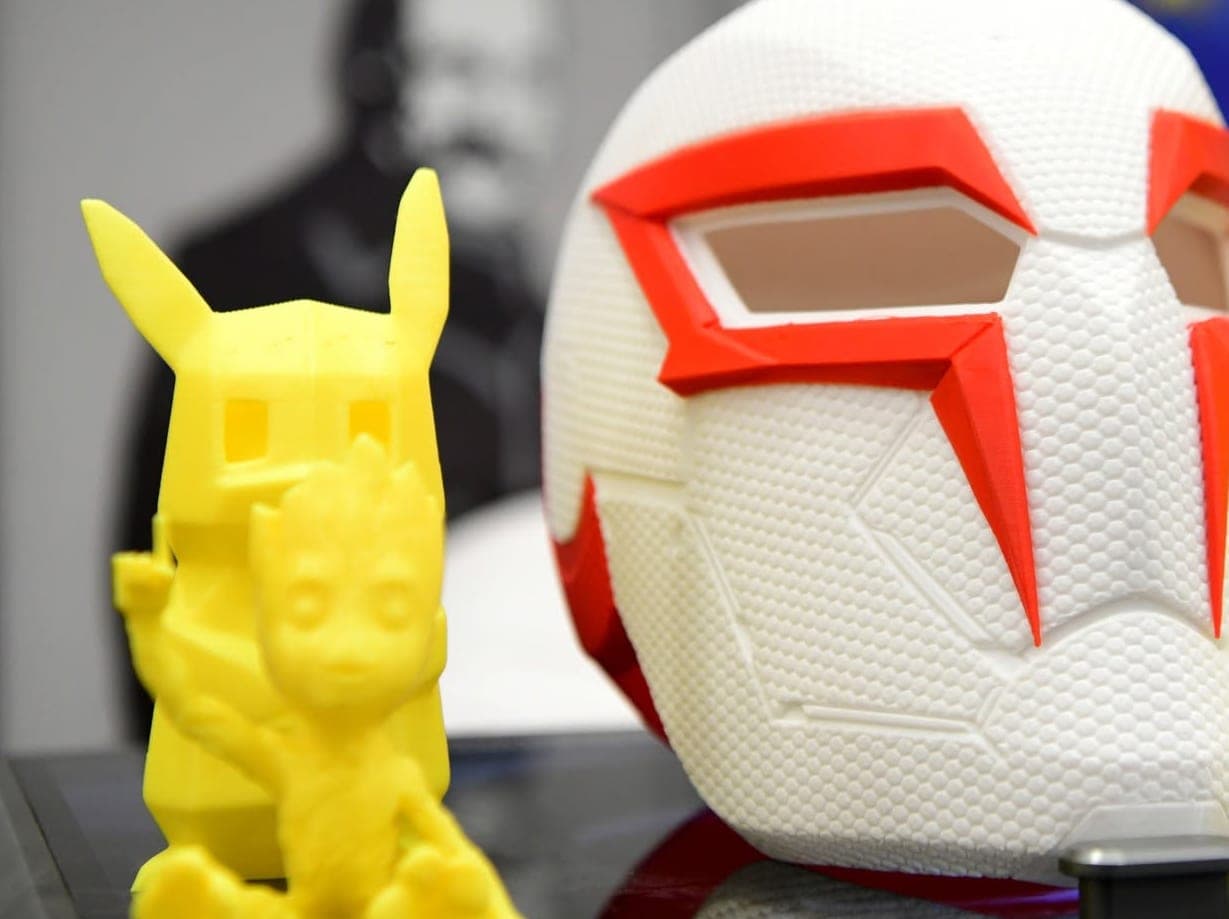
| Cosplay props and helmets | PLA | Hard | Lots of time: printing, sanding, painting |
| Architectural model parts | PLA | Hard | Scale and fine detail |
| Spare parts to order | PETG or ASA | Hard | Measuring and modelling must be priced in |
| Corporate souvenirs | PLA | Medium | Small batches, consistent quality |
| Phone cases | TPU | Medium | An exact model for each phone |
| Car interior accessories | ASA or PETG | Medium | Heat resistance, see below |
The key rule when selling is the licence. Many downloadable models carry a Creative Commons NC licence, which allows only non-commercial use. To sell, use your own design or a model whose licence explicitly allows commercial use. Pricing, the market and first orders are covered in 3D printing as a business.
3D printing car parts: what is fine and what is not
Many people want to 3D print car parts, and two rules matter above everything else.
First: heat. A car parked in the summer sun gets very hot inside. PLA softens at around 55°C, so it is not suitable for the interior: a mount may bend or fall off. PETG handles heat better (up to about 75–80°C; Prusa's knowledge base gives 80°C). ASA is also a good choice for sun and heat, but it needs an enclosed printer and good ventilation.
Second: safety. Print only decorative and organising parts: a phone mount, a cup holder adapter, interior clips, organisers, knob caps. Never print a part that safety depends on: anything in the brakes, steering, seat belts, airbags or wheels.
Before printing anything, ask yourself: “Will I still use this in a week?” If yes, print it. If not, spend those hours designing your own first model instead. The most satisfying print is the one you designed yourself and that fits on the first try.
Where to find models for these ideas
The best-known free model libraries are Printables, MakerWorld and Thingiverse, with many versions of almost every idea above. Before downloading, check three things: the licence, the comments (they often say which settings worked) and other users' photos. A detailed overview of model sites and slicers is in free STL files and slicers.
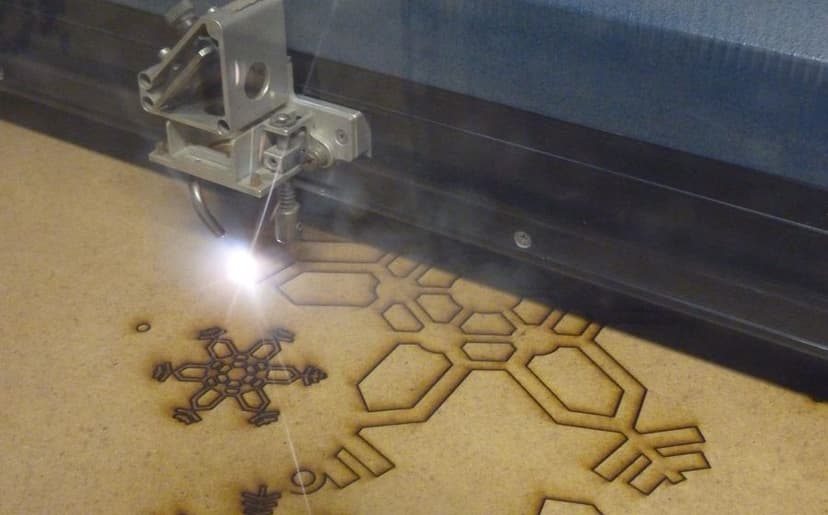
Some ideas work better with another technology. Wooden boxes, signs, engraved gifts and flat decorations are faster and nicer with a laser cutter: see laser cutting ideas.
Want to design your first object in one day?
Printing a downloaded model is a good start, but the real fun begins when you design the object yourself. At the TDS one-day workshop 3D Printing: A Useful Household Item in One Day you design a simple household item in Fusion 360 in 3 hours and print it the same day. The workshop is for adults and takes place in our lab in Tbilisi.
If you want to go deeper, the 6-week course "3D Design and 3D Printing" teaches precise modelling, tolerances, materials and small-batch production, and you finish with your own product. It is listed with the course for teens on our 3D printing courses page.
 Course at TDS3D Design & 3D Printing6 weeks · 32 h · Starts 18 NovDetails
Frequently asked questions
What should I 3D print first?
Start with a test model such as 3DBenchy or a calibration cube, then print something useful: a cable clip, a hook or a drawer organiser. These print easily and you use them right away.
What makes a good 3D printed gift?
Personalised objects: a name keychain, a lithophane with a family photo, a bookmark or a desk organiser. Personalisation is what gives a printed gift its value.
Can I 3D print car parts?
Interior accessories and organising parts, yes, in PETG or ASA, because PLA softens in heat. Safety-related parts (brakes, steering, seat belts, wheels) must never be printed.
Can I print and sell a model I downloaded?
Only if the model's licence allows commercial use. A model under a Creative Commons NC licence may be used only for non-commercial purposes. The safest route is your own design.
How much does one print cost?
Material cost is usually small. A kilogram of PLA costs roughly 55–70 GEL in Georgia, so the material for a 30 g object costs about 2 GEL. The slicer shows the exact weight before printing. When selling, the price must also cover design time, print hours and finishing.
What are the best 3D printing ideas for kids?
Things children can design themselves: a name keychain, a bookmark, a pencil cup in Tinkercad. For school, geometric solids, gears, molecules and NASA's space models work well.
Pick one of the 40 ideas that you will use this week and print it. If you want your next object to be your own design, join us at the one-day workshop.
Sources
- #3DBenchy, the jolly 3D printing torture-test
- Gridfinity: the modular, open-source grid storage system, Gridfinity wiki
- 3D Resources, NASA Science
- About CC Licenses, Creative Commons
- PETG, Prusa Knowledge Base
- Flexible materials, Prusa Knowledge Base